01
The Desert Bowl
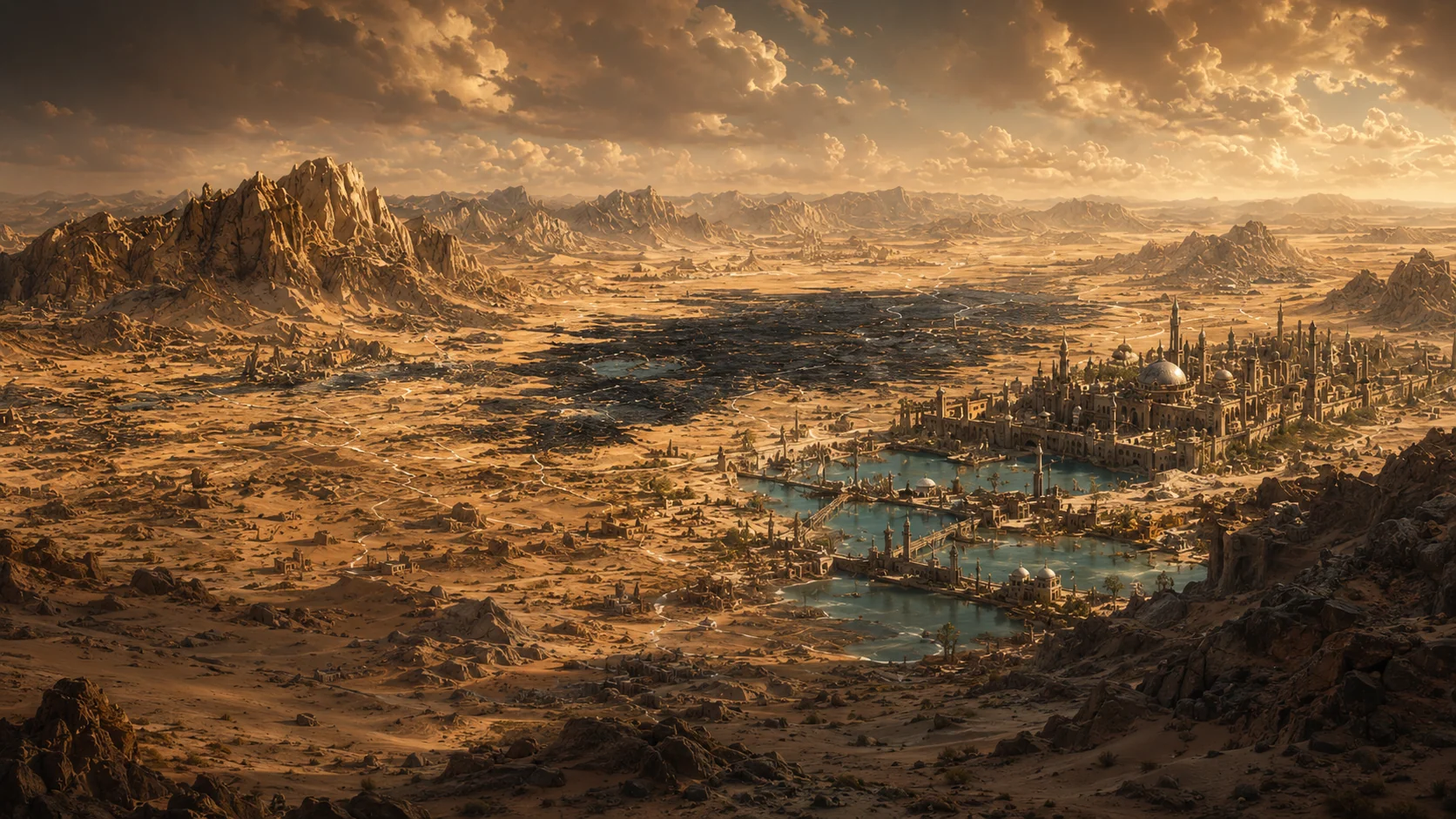
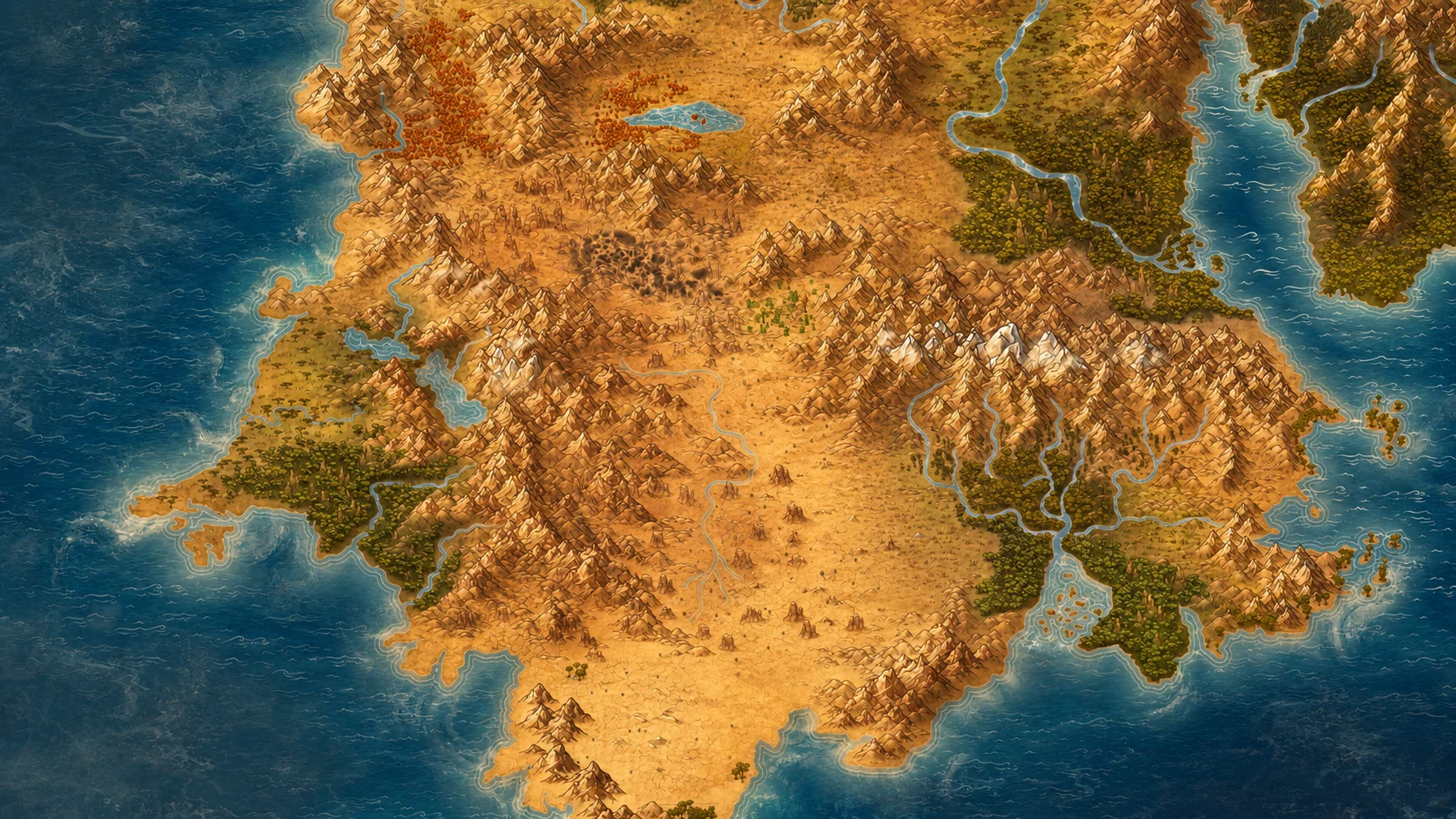
Kashar lies in a vast sunken basin, a bowl of sand and stone ringed by ancient mountains that trap the heat and turn away the rain. Everything the realm has, it has wrung from this hard ground.
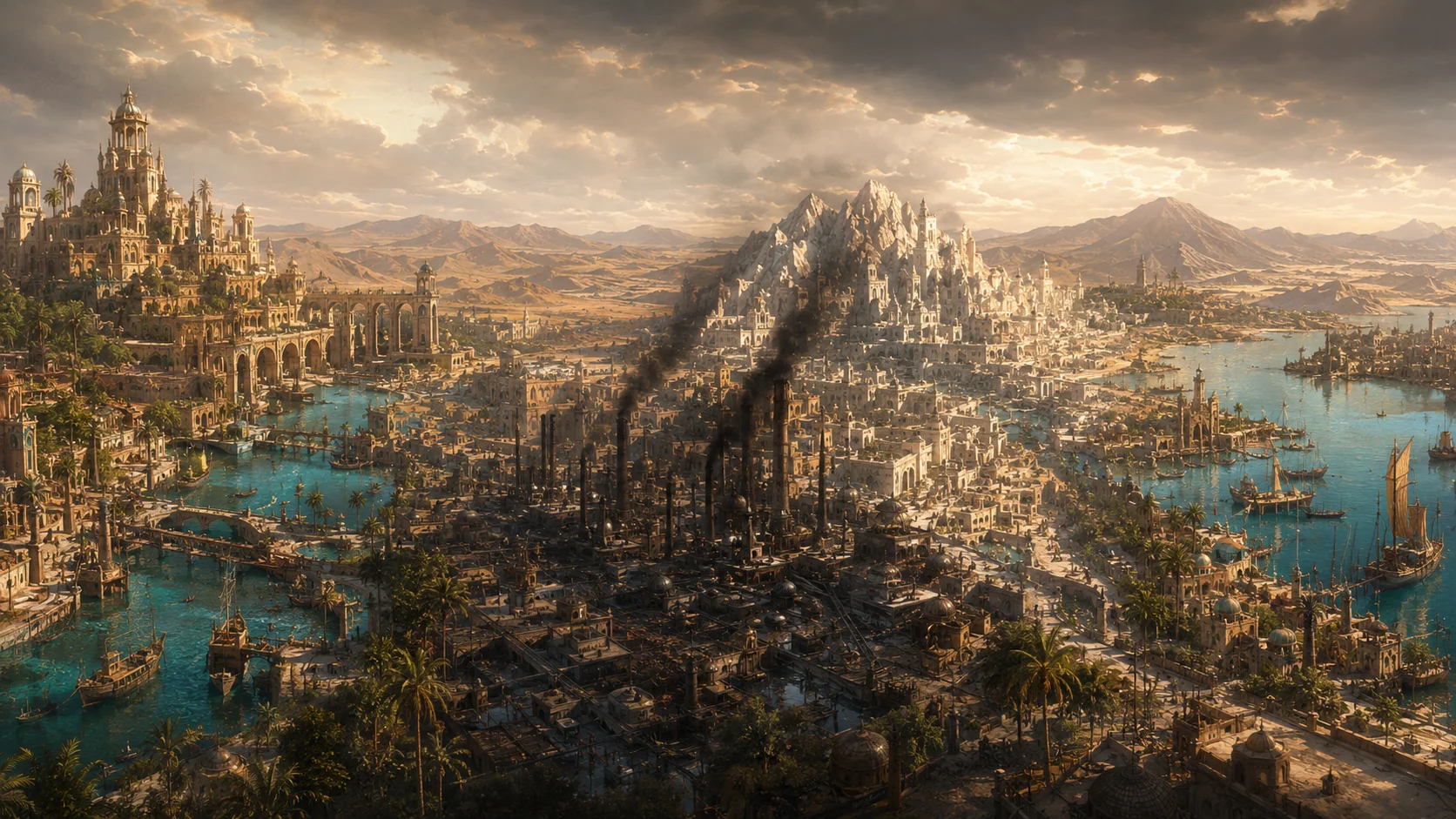
Kashar is a realm without a throne, ruled by balance rather than by blood. Four cities stand at its heart, each bound by need, each armed with what the others require.
Tar flows beneath everything. Drawn from the black fields of Husavrat, it fuels engines, forges Zarr and preserves life in the wastes. From the tar the Kashari have built marvels, defences and a way of life as severe as the desert itself.
Practical. Severe. Ingenious. The people of Kashar endure where others perish. In quiet ways, they defy what the world believes should be unchallenged.
The Tar Desert Beneath a Burning Sky
Kashar lies in a vast sunken basin, a bowl of sand and stone ringed by ancient mountains that trap the heat and turn away the rain. Everything the realm has, it has wrung from this hard ground.
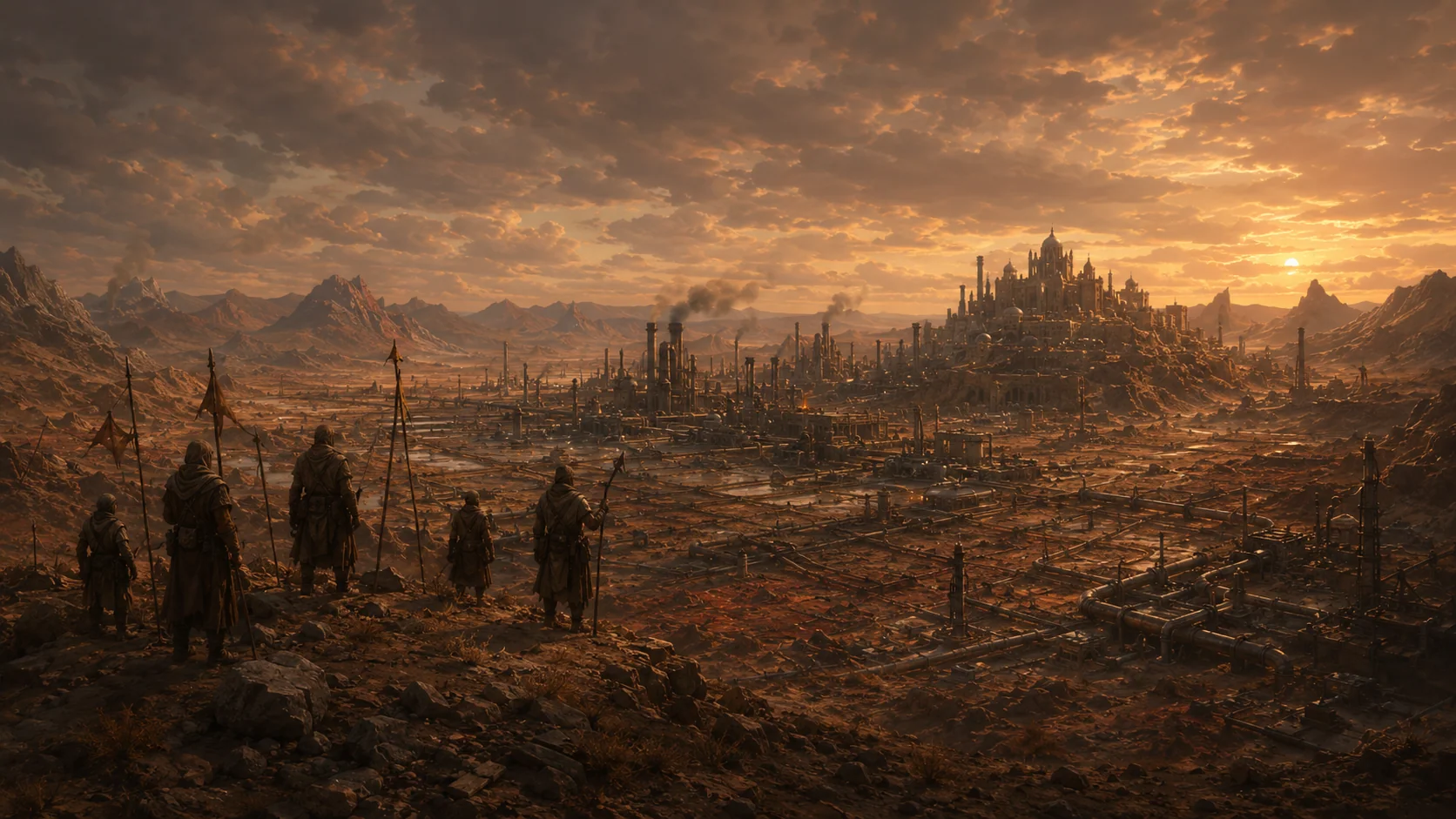
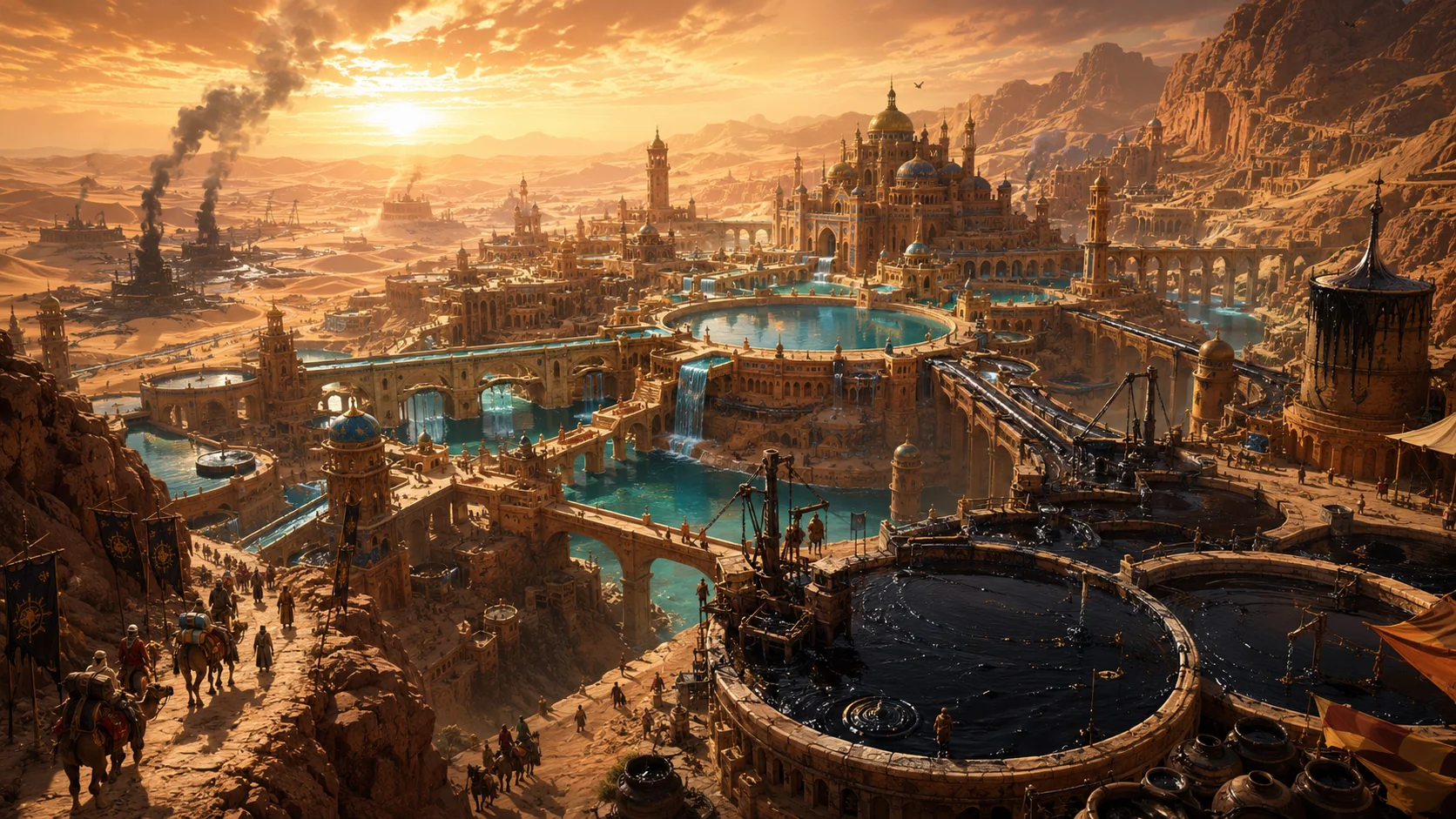
Black tar seeps from the earth across the Husavrat fields, the richest deposits known in the world. Above them the works of Morden scar the land with open pits, pipelines and the smoking halls where the tar is refined.
In the softer south-east, rare rivers cut through the rock and feed the deep cisterns of Ushk Nasseth. Here water is law, hoarded in guarded reservoirs and spent drop by drop to keep the gardens and the people alive.
The eastern heights are pale stone and bitter wind, the Moon Mountains at whose foot Zarraketh was carved. Their quarries yield oridian, the rare stone that alone can hold the mind of a Zarr. It is the source of the maker-city's power.
Far to the west the desert breaks at last into jungle, lagoon and open sea. Here stands Joruvin, the harbour through which Kashar's tar leaves for the wider world and its wealth flows back.
Beyond the roads and the four cities lies the deep desert, an emptiness that belongs to no one. Its dunes hide ruins, lost wells and the secrets the sand keeps, among them the hidden brotherhood of the Tesk Vaskarr and the empty tomb they guard.
The Tar-Bound People of the Desert.
Kashari are shaped by scarcity and sun. Every object serves a purpose. Every action preserves life. Nothing is wasted. Strength is quiet, and endurance is taught before words.
Water is never drunk alone and never wasted. Shade waits at every door. Reservoirs, channels and cisterns are built by many and kept by all. In Ushk Nasseth the law protects every drop.
Kashari keep no sacred bloodlines and no inherited crowns. A name is earned rather than born. We are called by given name, family, kash origin and dur branch. Our legacy is work that outlives the maker. Savrun. Korrun. Vedrun. Solvarr. Lines of craft rather than nobility.
Tar is more than trade. It is medicine, sun-ointment, binding agent and the foundation of labour and fortune. It seals our vessels, strengthens our walls and flows in our veins like purpose.
Zarr constructs are our tools, our haulers, our pumps, our lifters. They draw water, turn mills and mend stone. We build them. We maintain them. We live beside them.
Kashar worships no god in the open. Yet in hidden places some honour Drax, the slain god of defiance, and those who refuse chains. The flame is small, and it is never gone.
Kashar is mostly human and mortal. Our cities of Joruvin, Morden and Ushk Nasseth draw traders, sailors, scholars and labourers from far lands. Many come for work. Some stay for life. In our harbours and streets, many tongues are spoken.
The Cities That Keep the Desert Alive
The water-city. Oldest city of Kashar. Born of the aquifers in the Third Age, Ushk Nasseth is built to catch, store and move life itself. Governance: ruled by the Congress through the Flow Table; the Chancellor holds office only while the city drinks.
The tar-city. Sits over the Husavrat tar fields. Born of the tar seeps in the Third Age, Morden refines the desert's blood into fuel and wealth. Governance: ruled by the Guild of Tar Standards above five powerful conglomerates. The mark binds the trade, the Paperbrands set the terms and the Tower of Measures keeps account.
The maker-city at the foot of the Moon Mountains. Carved from buried stone in the Third Age, Zarraketh is the place of making and of secrets. Only here are the Zarr made. Governance: ruled by the Deep Cut, the master glyph-engravers. Their word is law, their glyphs the lock on every construct.
The western harbour city. Youngest of the four. Founded in the Fourth Age, Joruvin rose among jungle and lagoon to become the realm's gateway and its market. Governance: ruled by the Drydock, a merchant council that rules by coin. Known as the Retired City; reached through the Kuruluk Peak pipeline connection.
The Desert Realm of Tar, Stone and Defiance.
The richest tar deposits in the world. Beneath these black seeps and open pits rises Morden, a city built upon industry. Tar binds, heals, shields from the sun and powers mills, vessels and furnaces. It is medicine, sun-ointment and blood of commerce—Kashar's lifeblood.
In the west, the dwarves of Khazural bored a tunnel through living stone, driving the great pipeline to Joruvin. Bound by the Contract of Kuruluk Peak, their craft carved a passage no Kashari could have achieved. Without this tunnel, Joruvin could not exist.
Hidden deep within the empty desert, the Tesk Vaskarr keep a forbidden shrine to Drax. A standing stone beneath the open sky, a deliberate void at its heart. No body lies here—defiance was never buried, and its purpose is known only to those who risk the sands.
Eastern peaks of pale stone and bitter wind. Within their quarry cuts lies Zarraketh, a maker-city buried deep. These mountains yield oridian, the rare mind-stone that holds inscribed glyphs forever and forms the minds of the Zarr.
The Guild of Tar Standards' fortress rises above smoky Morden—brass and dark stone, windowless and absolute. Here the mark is set, and every shipment's weight, purity and price are recorded. The Guild's mark is a black circle crossed by a silver line, and the Paperbrands serve as inspectors. Its darker memory: the Black Flood, when improperly tested tar buried a district in burning sludge.
Along the southern frontier with Myrien lies a wide waste of scorched red earth. No cover. No mercy. Beyond it, the elven war-fortress of Vael'Vordath watches with cold, unblinking patience. The Scar remains a testament to a long enmity that neither side has buried.
Made Things of Tar and Oridian.
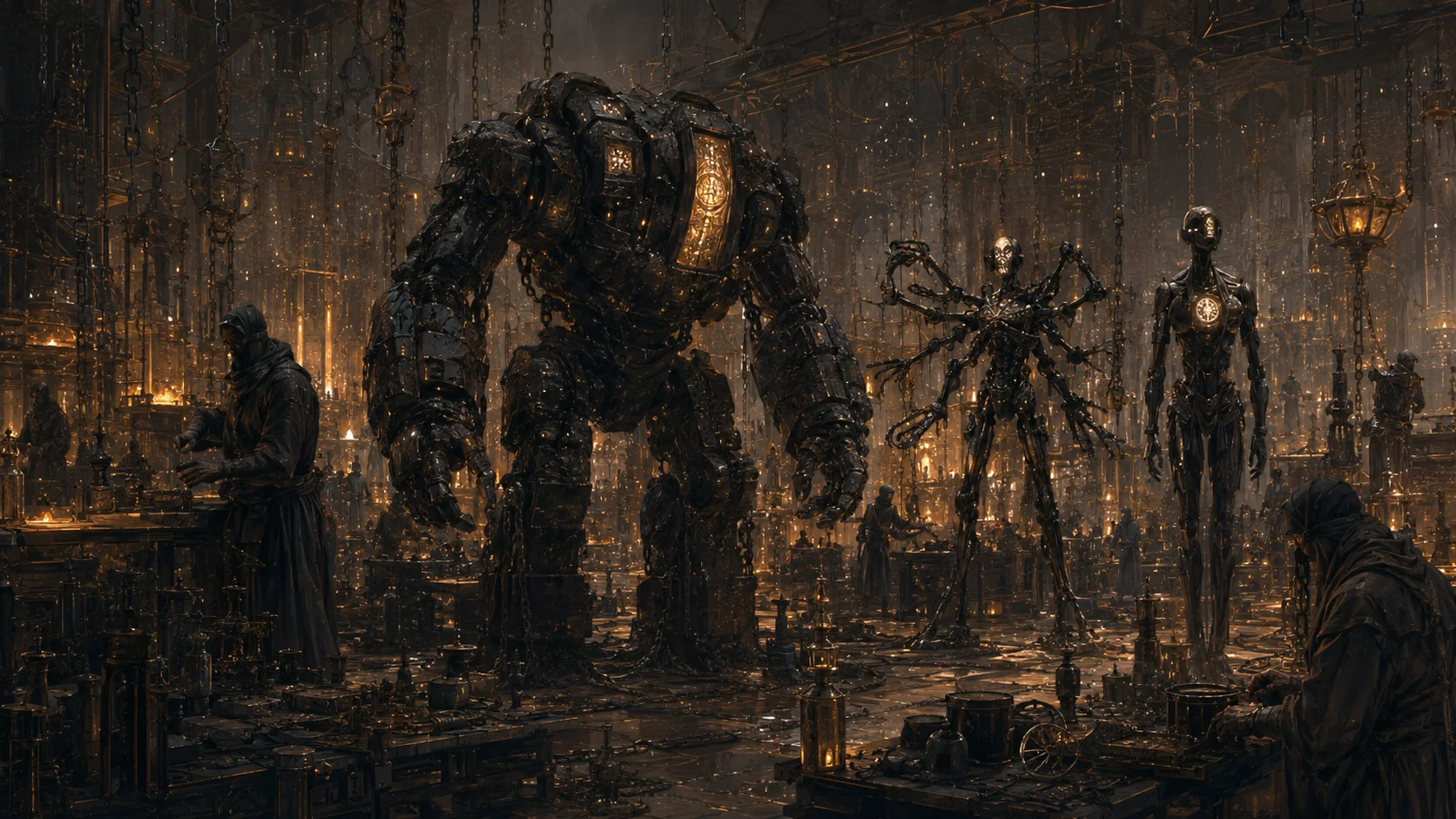
Zarr are soulless constructs, made only in Zarraketh. Tar gives the body and motion; a mind of glyphs cut into oridian gives form to thought. Obedient and will-less, they do as they are cut to do.
No single shape defines a Zarr. Towering frames labour in the tar pits. Many-handed shells excel at delicate work. Slender forms serve as stewards, messengers and keepers of the halls.
A Zarr's mind is a stack of inscribed oridian leaves, each leaf a single art or command. It can do only what its leaves permit. Remove, add or re-cut, and the Zarr is remade for a new task.
Once, the engravers reached heights the Deep Cut can no longer match. Before the Valiran conquest they made wonders, and willed Zarr that could want and decide. Judged too dangerous, they were hunted to destruction. Other marvels were lost to the conquest. Only fragments remain.