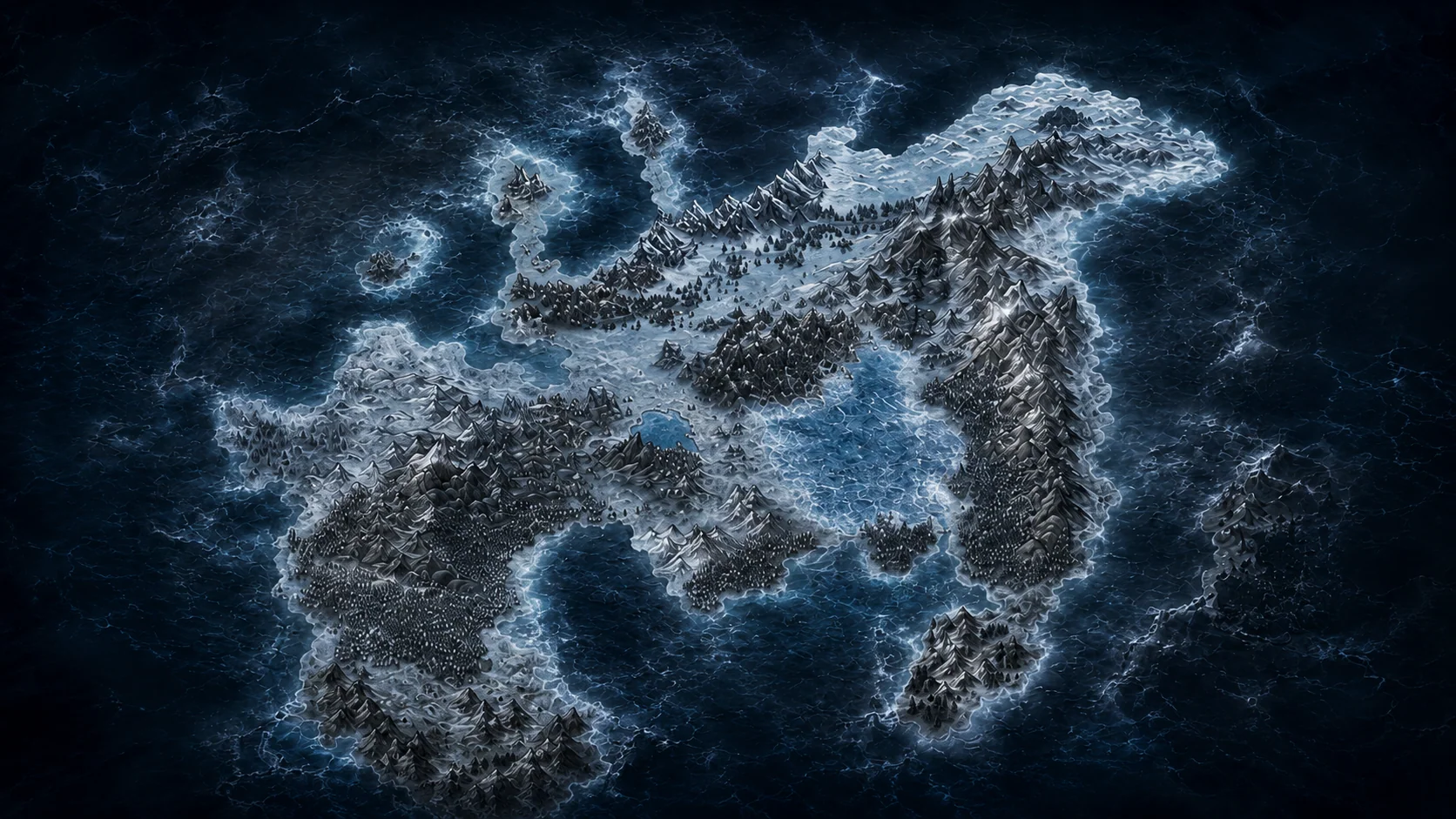
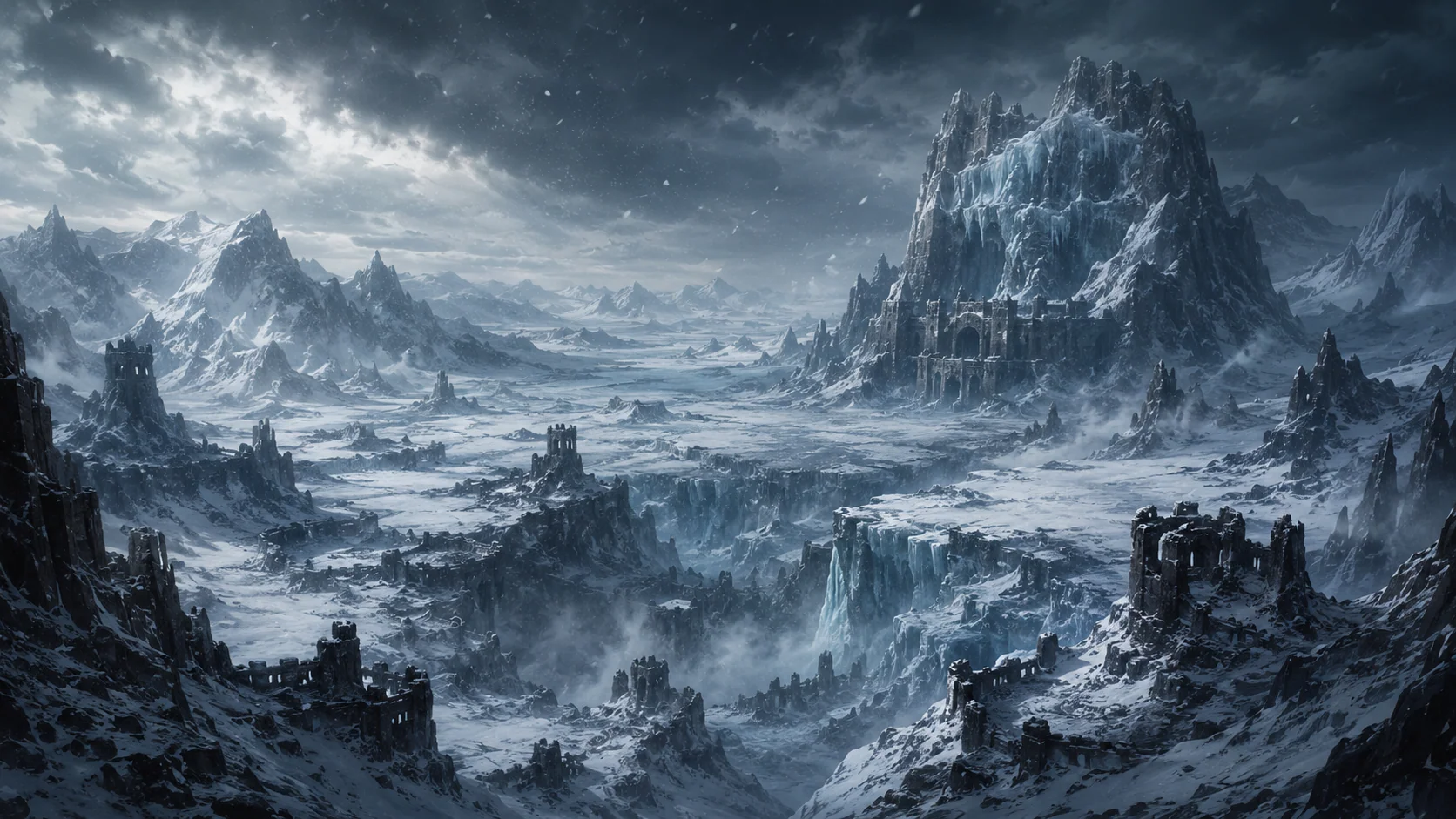
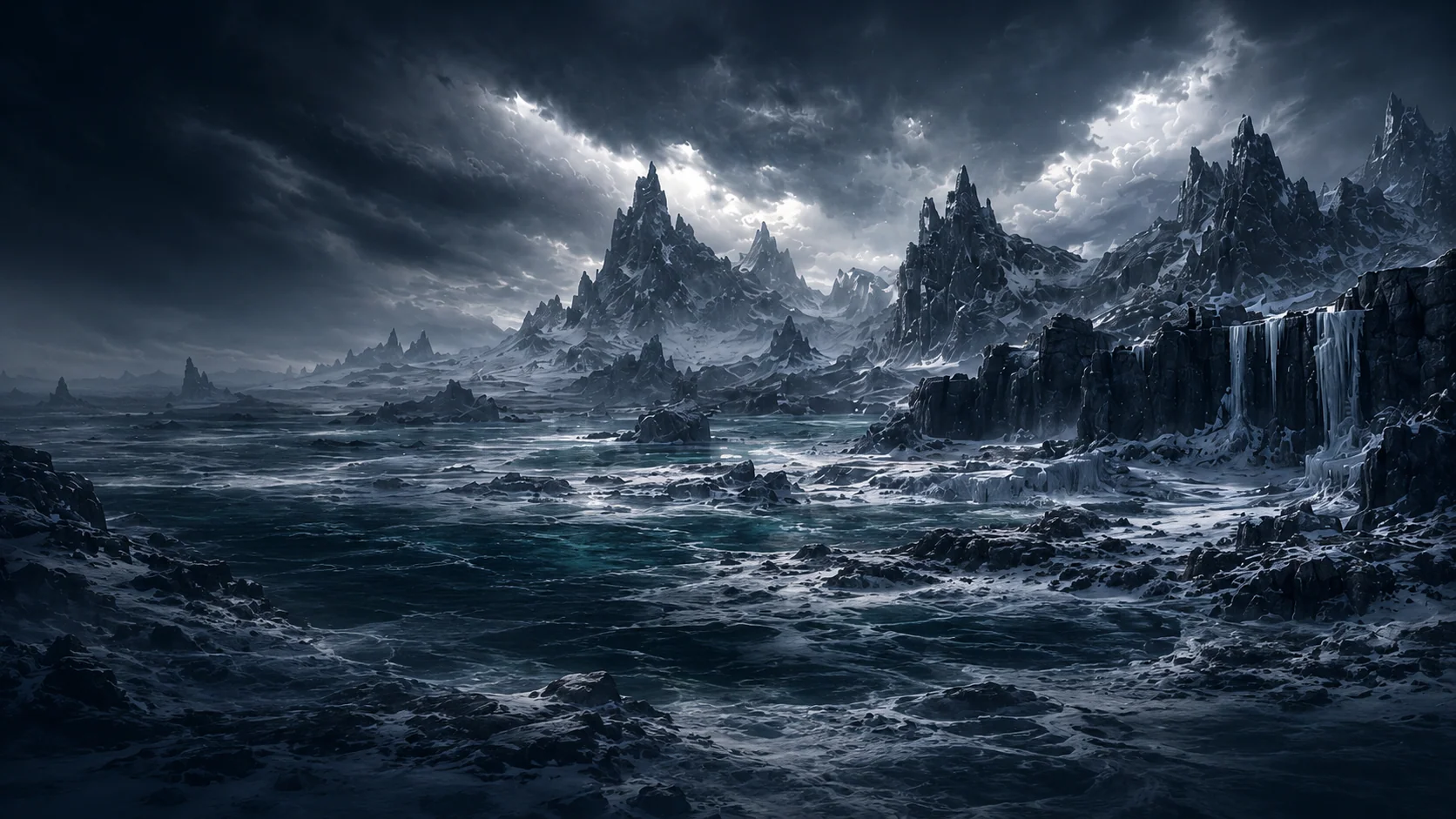
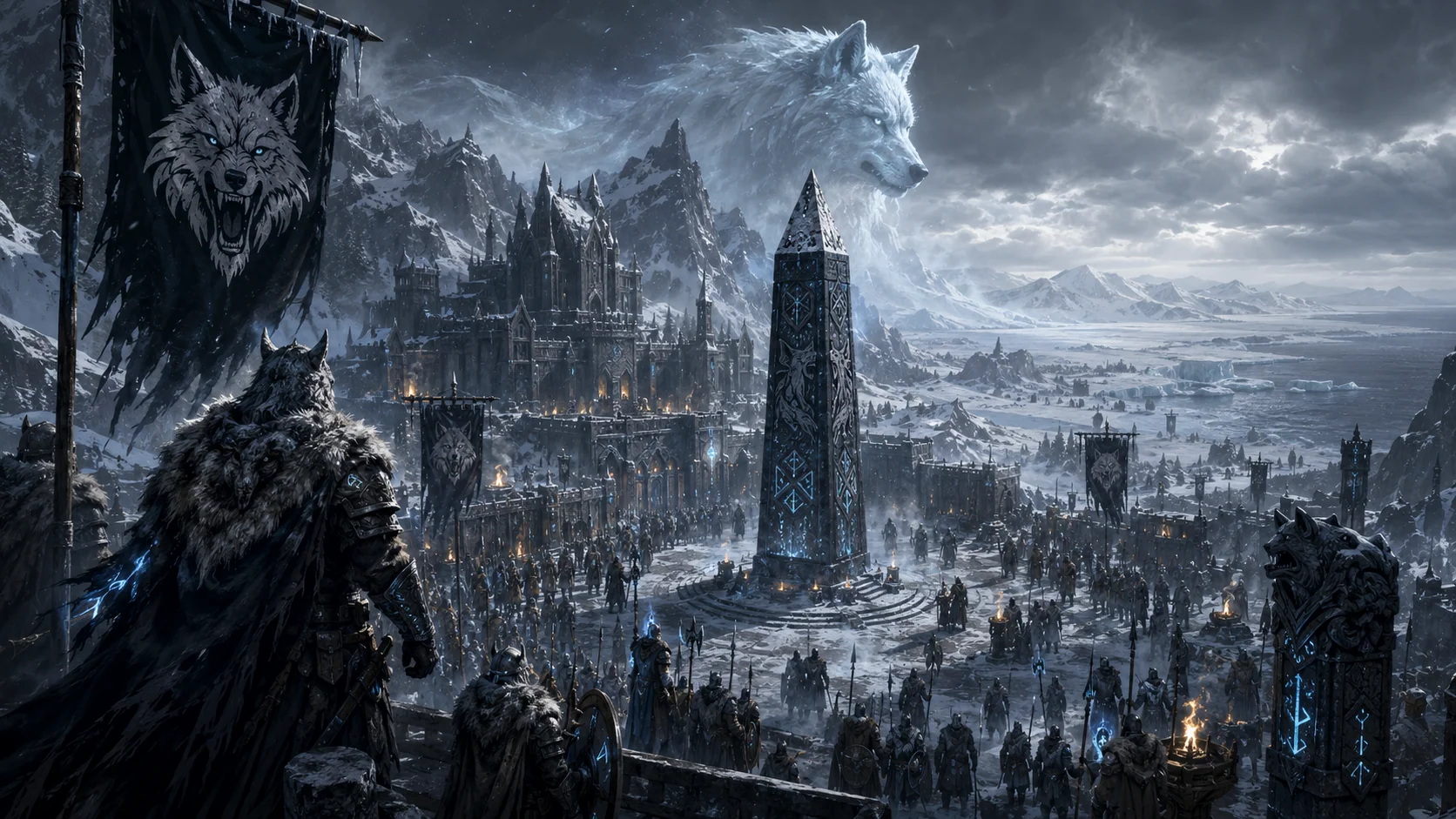
Grimhold is the frozen north of Arkanthys, a realm of glaciers, fjords, and endless winter where the land gives nothing freely. Its people are the Skarnn, clan-folk hardened by the cold, who live by strength, honor, and tradition and cross the deadly northern seas to raid, hunt, and trade for what the ice denies them.
They answer to their jarls and gather at the capital, Nifleheim. But Grimhold no longer stands alone: subjugated generations ago by the Sartan Empire, it is now a realm divided, between those who would keep the north free and closed, and those who have tied its future to the Empire.
Geography
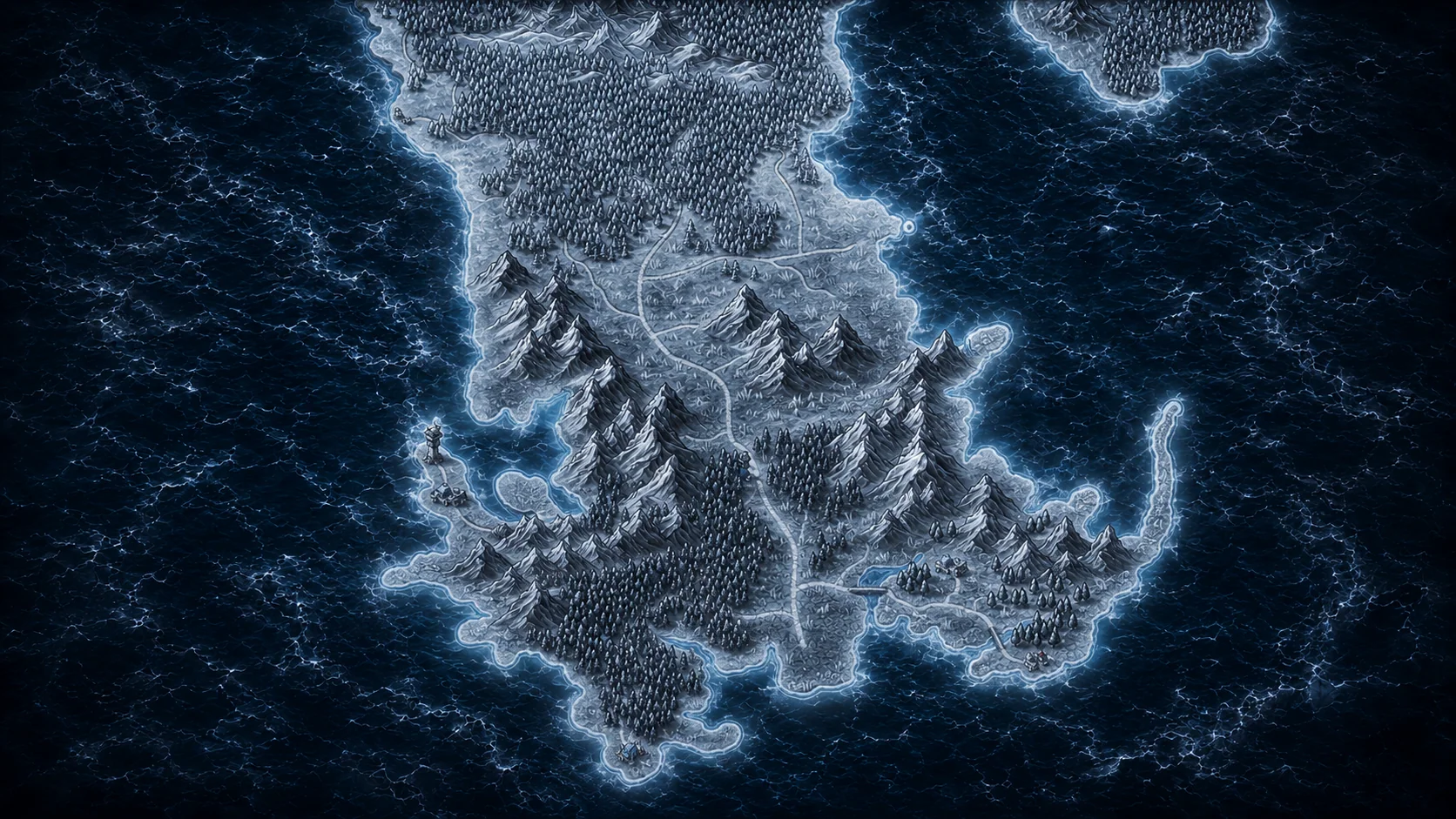
Ice, black stone, and wind that never rests. A land of glaciers, fjord cliffs, and frozen valleys held in endless winter.
Extent~1,200,000 km²of frozen wilderness
Elevation−180 m to 4,900 mfrom ice basins to spires
ClimatePolar Continentalextreme & persistent
Daylight Range0–24 hourslong nights, pale days
01
Terrain & Landforms
The land of Grimhold is steep, broken, and bare. The Pale Spires rise in jagged peaks above wide glacial basins, where ice that has not melted in an age buries whole valleys. Black cliffs fall away into the frozen White Sea, and the wind-scoured plateaus between them offer no shelter but bare stone.
Jagged peaks and steep escarpments split the land into high ridges and deep, ice-locked valleys.
Glacial basins hold ancient ice, with whole valleys buried beneath it.
Black stone dominates the coast and the heights, bare and cold in every season.
02
Climate & Seasons
Cold is constant in Grimhold, and its seasons are measured by the moods of the cold itself: when the storms come, how the wind turns, and what the ice does underfoot. Storms can rage for weeks, and silence can last for months.
DeepwinterTotal darkness and unbroken storms.
FrostgripA pale sun, brittle winds, and ground frozen hard.
Thaw-LieA short, treacherous melt that thins the ice and drowns the careless.
IcefallThe gales return, the rivers freeze, and the long night closes in.
03
Mountain Ranges & Passes
Mountains rule Grimhold. The Pale Spires and the Icethorn Peaks carve the land into isolated valleys and keep clan apart from clan, and the few passes between them are merciless. Only the desperate, the well-prepared, or the foolish attempt a crossing in winter.
The highest peaks rise into the storm belt, where the air thins and the weather never breaks.
Passes are narrow, exposed, and prone to collapse, often shut for months at a time.
Avalanches and icefalls make even the known routes deadly.
04
Waters & Icefields
Water in Grimhold is never still. It is ice, or it is trying to be. Glaciers creep. Rivers jam. Seas freeze and fracture.
GlaciersVast sheets of ice fill the basins and grind the land into ridges and valleys.
Frozen Seas Ice shelves and floes reach to the horizon. The greatest is the White Sea to the west, sailed only by Clan Karvandar's icebreakers.
Rivers & LakesBrief and treacherous in the thaw, locked solid in the freeze, and trusted only when the ice is judged thick enough to hold.
05
Routes & Remote Frontiers
Few roads cross Grimhold, and fewer last. Because the mountains cut the land apart, most travel goes by sea, along the coasts in Karvandar and Vossk ships, or overland by frozen river and the handful of passes through the peaks. Everything else is a matter of necessity and luck.
Overland routes are long, exposed, and often closed for months by snow and storm.
Outposts and waystations are rare, and a traveler can go days without sighting one.
Past the White Border, the settled land gives way to deep wilderness, the dead reaches of the Icemarch, and places that survive only in story.
People & Cultures
The people of Grimhold are the Skarnn, clan-folk shaped by cold, scarcity and centuries of war. They live by strength, honor and loyalty to clan and kin, bound by sworn oaths and the judgment of their ancestors. Worth among them is proven, never given: in the Arena, on the ice and in the trials each clan sets its young.
01
Identity of the People
The Skarnn are the people of Grimhold, children of ice and black stone. They carve life from a frozen land, bound by clan and hardened by the north. Among them, pride is earned and never given.
02
Clans & Blood-Oaths
The clan is the heart of Skarnn life. The homeland is held by four great clans, Grimwulf, Karvandar, Stoltengard, and Vossk, and a Skarnn's first loyalty is to blood and kin. Oaths are sworn before the clan and witnessed by the ancestors, and to break one is a dishonor that clings to a name long after the oathbreaker is gone.
03
Daily Life & Survival
Survival in Grimhold is constant labor. The Skarnn live by hunting and fishing, by timber, stone, the forge and above all by the sea, where the clans raid, whale and trade. Much of the year is spent storing food and fuel against winters that can cut a settlement off for months. Family and clan are the only true shelter from the cold.
04
Rites & Beliefs
The Skarnn honor their ancestors and the spirits of the wild. They hold that the honored dead pass into the cold and join the company of the forefathers and that rites of burial, oath and offering keep the living bound to them. The dead and the sacred law that governs them, are kept by the Elegy, the grim order of the grave.
05
Hospitality & Law
Among the Skarnn, a guest given shelter is sacred. To harm one who shares your hearth is among the gravest dishonors. Their law is harsh but fair: disputes among the living are settled in the Arena by binding combat, a verdict that holds even over the Jarl, while sacred law and the dead fall to the Elegy.
06
War Traditions
The Skarnn fight for clan, for kin and for the right to endure. Every able Skarnn is expected to bear arms. Their warriors are forged in the clan trials of adulthood and tempered in raid and battle. Those who fall with honor are remembered in saga, their weapons carried to the Veilforge to rest among the dead.
07
Appearance & Adornment
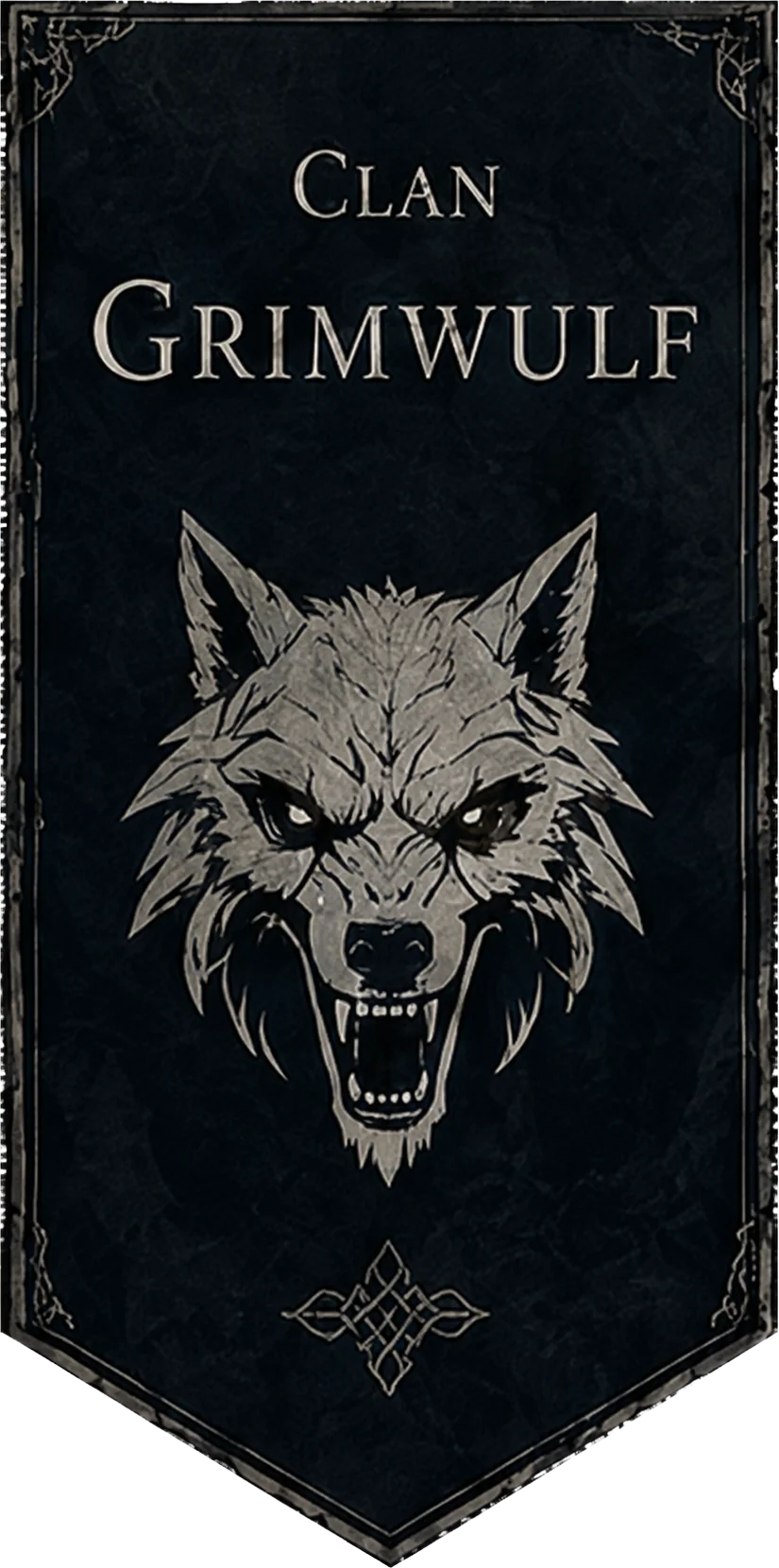
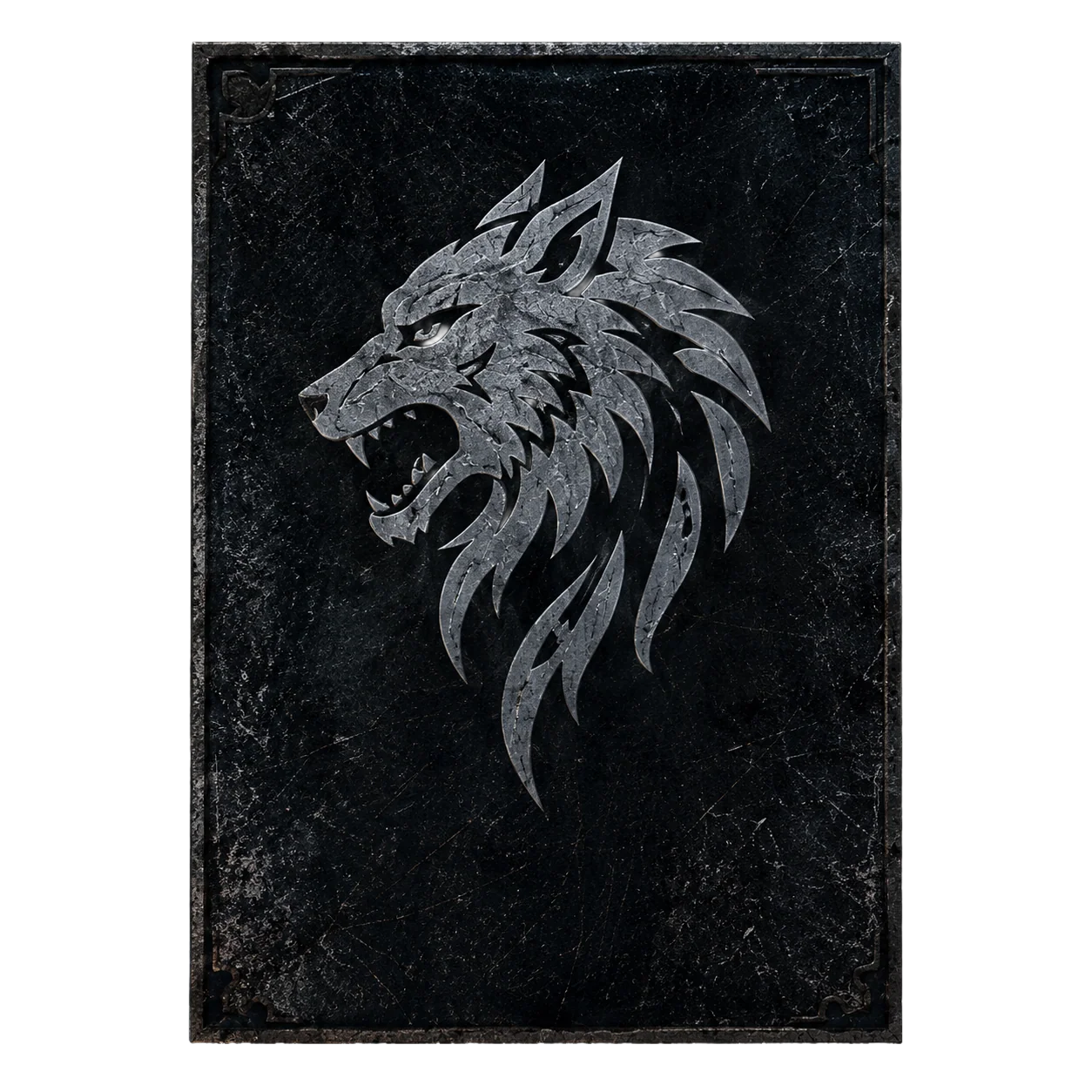
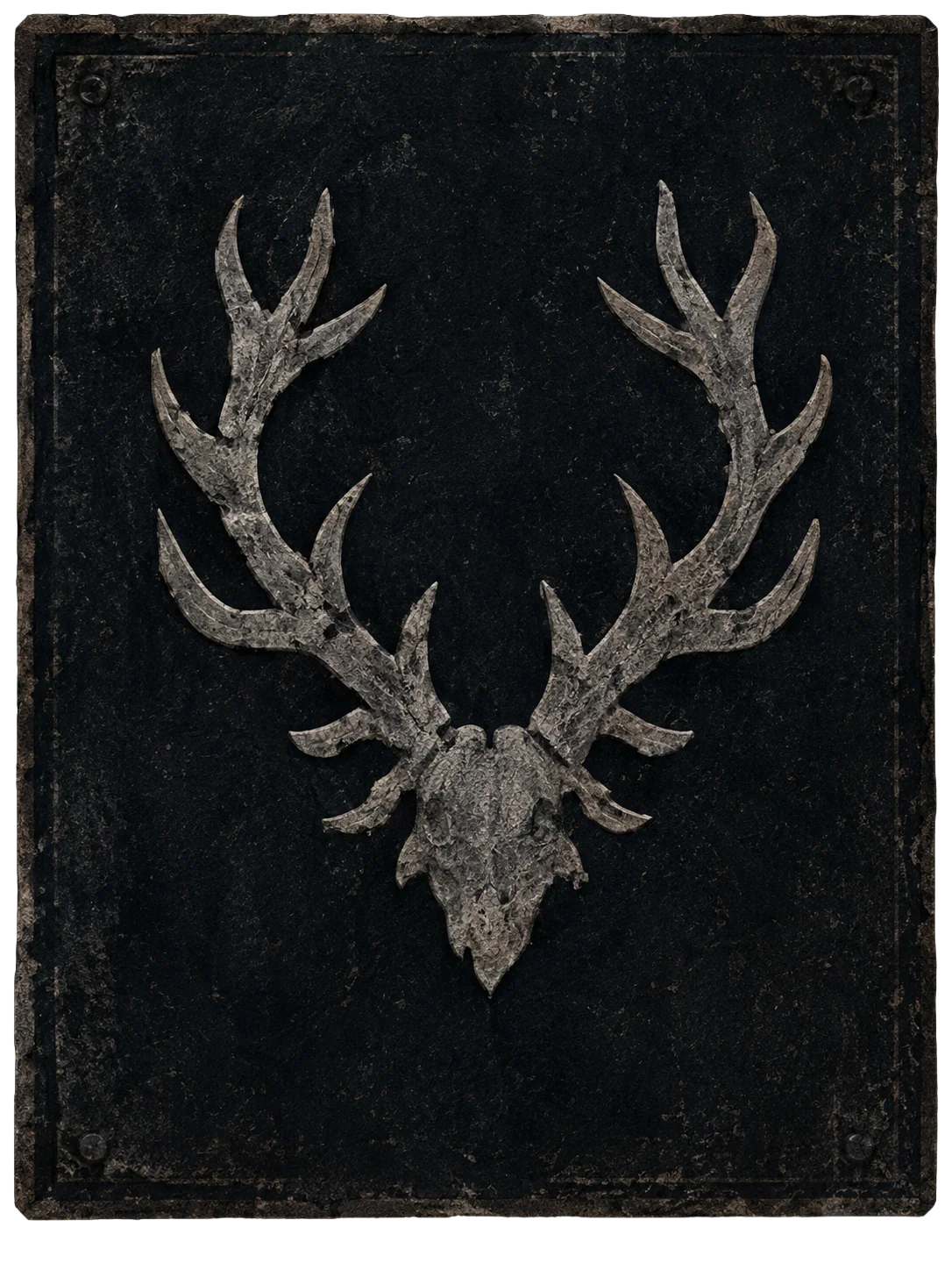
Skarnn clothing is made for cold and for war: layered furs and hide over bone and cold-forged steel. Markings carry identity. Tattoos and runic marks record lineage and sworn oaths. Clan members wear their clan's sigil, such as the wolf of Grimwulf or the antler of Stoltengard. Scars are kept visible and treated as marks of standing, earned in clan trials, raids or the Arena.
Clans
The Four Great Clans
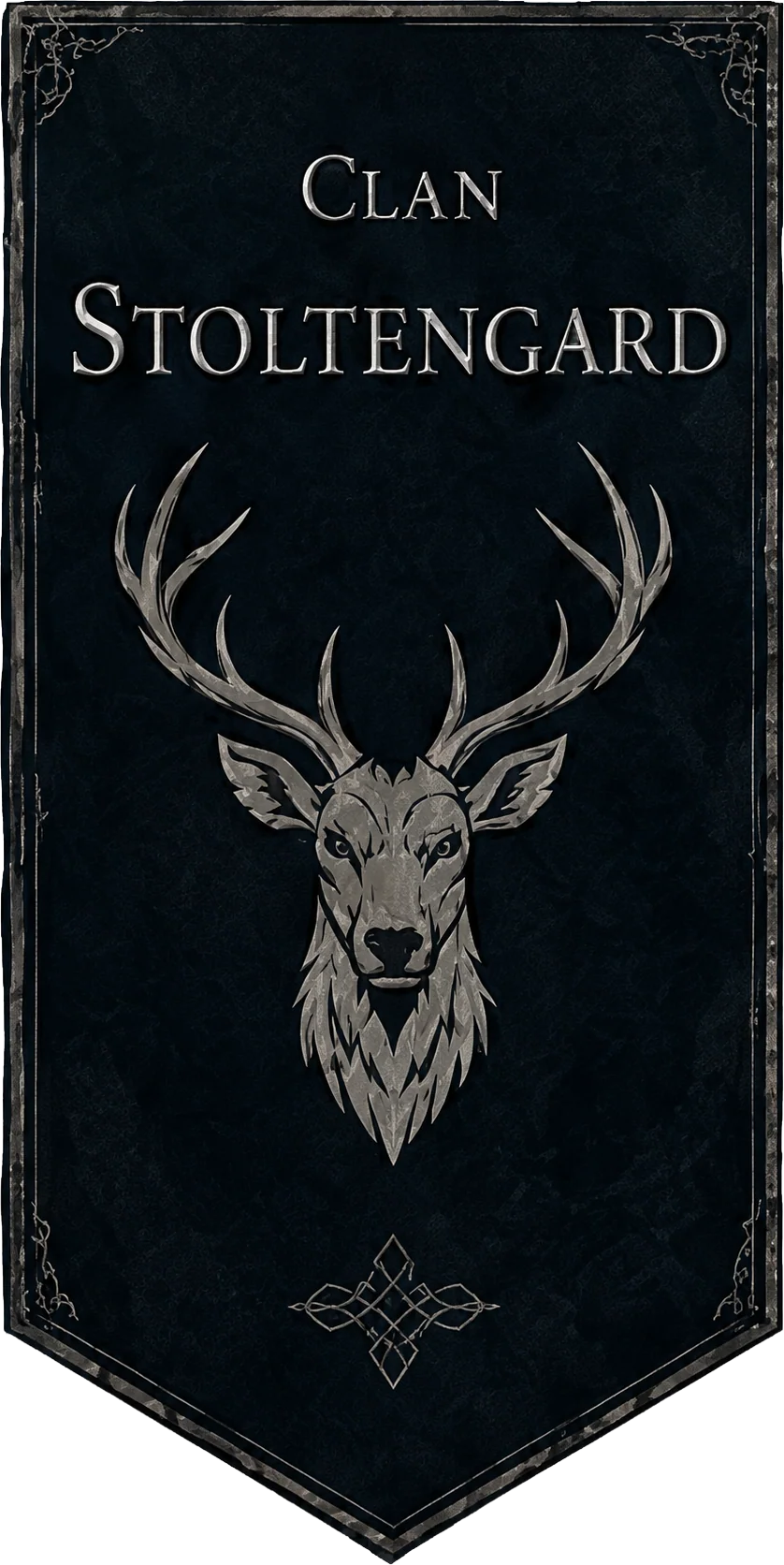
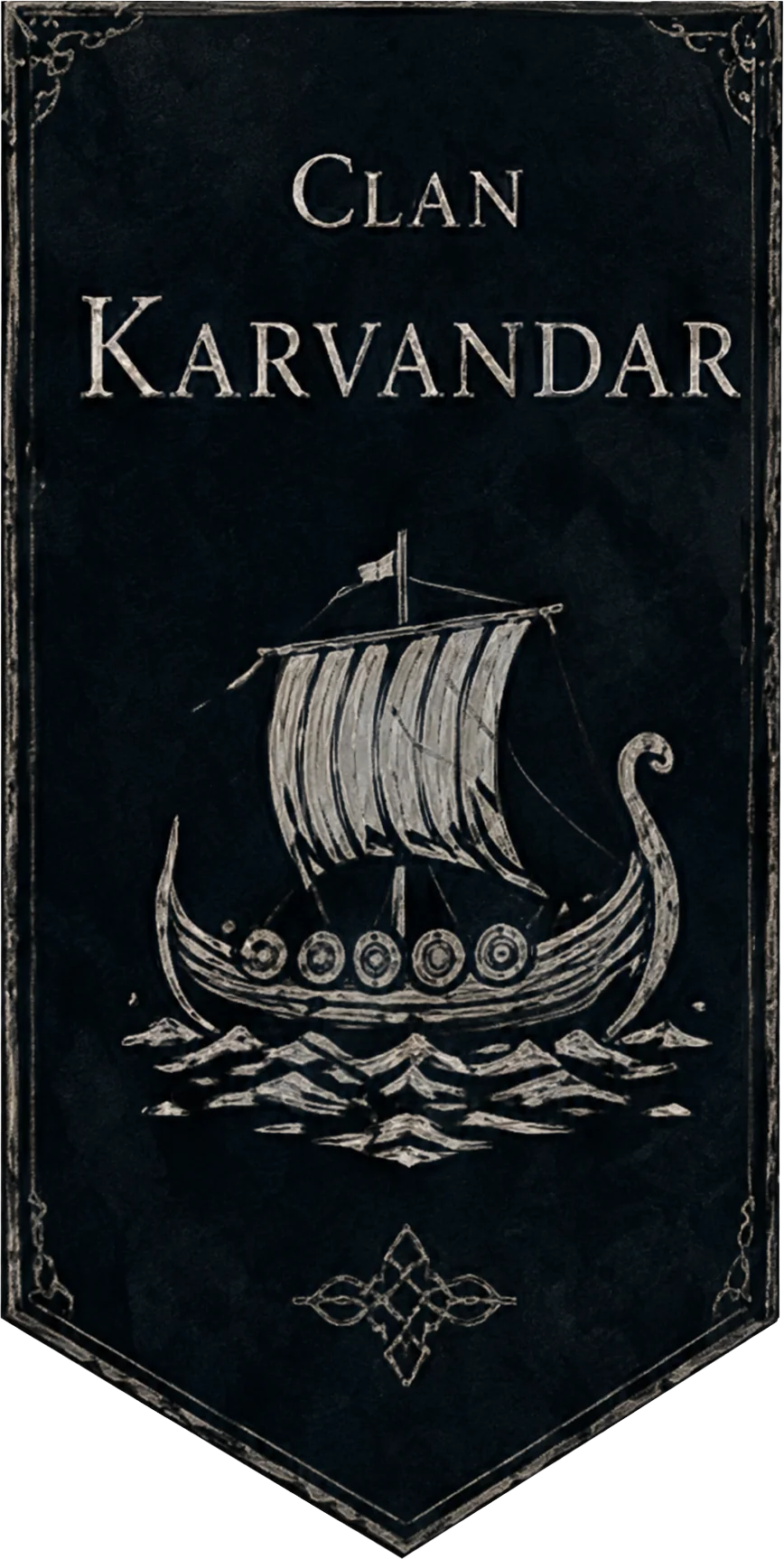
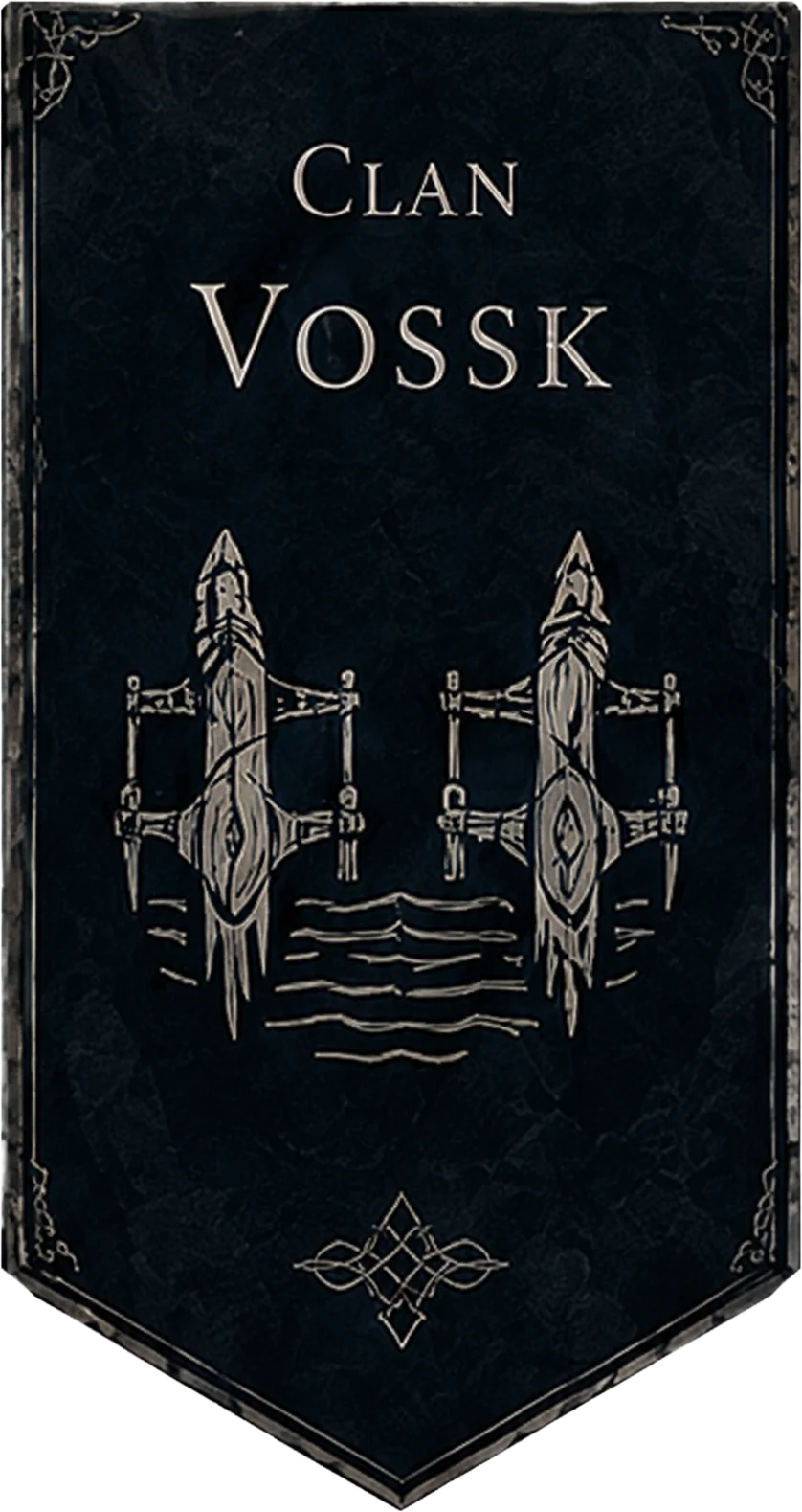
The Skarnn are organized into clans, of which four are dominant: Grimwulf, Karvandar, Stoltengard and Vossk. Each holds its own territory, fields its own warriors and is led by a jarl. Clan Grimwulf holds the high Jarlship over all from Nifleheim.
Grimhold has few settlements, set far apart and built for defense against cold and war. Its two great cities are the Skarnn capital of Nifleheim on the southern coast and the trade-port of Ravenhold in the southeast. The four great clans each hold a seat: Tham Lorn, Hafnarsvik, Stoltengard Keep and Twin Wharfs. Isolated outposts such as Bleakmarsh shelter travelers on the routes between them.
Settlements50+ Known
Population~450,000 (est.)
Clan Control4 major clans
01
The Great Holds
Great holds are the fortress-settlements of Grimhold, raised in places of strategic value and built from the land around them. Timber, stone, iron and earth are shaped into walls, halls, towers and gates made to survive the northern cold, command the surrounding territory and withstand assault. Each is the seat of a clan's authority, law and defense. The great holds include Nifleheim, Tham Lorn, Stoltengard Keep and Hafnarsvik.
02
Holdfasts & Hill Towns
Holdfasts and hill towns are the smaller fortified settlements of Grimhold, each bound to a nearby great hold and the clan that rules it. They serve as local seats of rule, shelter, trade, storage and defense, built with walls and watchfires to survive the harsh land and the enemies that move through it.
03
Villages & Wintersteads
Villages and wintersteads are the smallest settlements of Grimhold, home to hunters, fishers, herders and trappers who work the land directly. They sit wherever the country allows it, near a fishery, a hunting ground or sheltered grazing. They survive on what they take and store through the long winter. Most are tied to a nearby hold or clan for protection and trade.
04
Frontier Outposts
Watch-posts, gate forts and isolated stations raised along Grimhold's marches, passes, roads and wild borders. They shelter patrols, watch for raiders and beasts and carry the first warning when danger moves toward clan lands.
05
Harbors & Icebound Ports
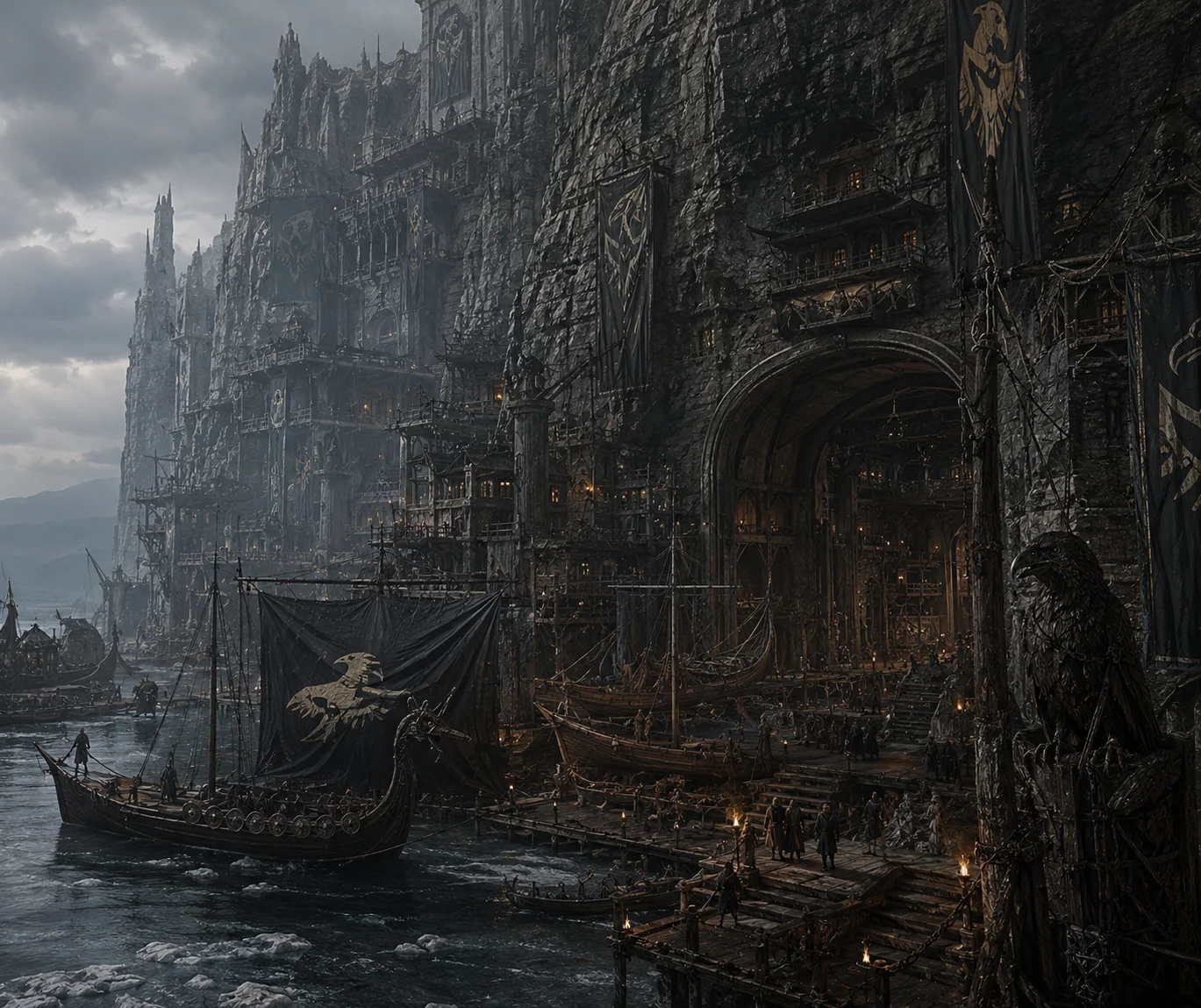
Harbors and icebound ports are the coastal settlements that handle Grimhold's sea traffic, the realm's main link to the outside world and between its own regions. They are built to work through ice floes, storm and freeze, with reinforced docks, drydocks and icebreaking ships. The chief ports are Hafnarsvik on the White Sea, the hidden harbor of Twin Wharfs and the open trade-port of Ravenhold, through which most foreign goods enter the north.
06
Ruins & Lost Settlements
Ruins and lost settlements are the ruined holds, abandoned villages and dead settlements left across Grimhold by war, famine, storms, monsters and clan collapse. Many were lost when the freezing of the land killed the country around them. The greatest is Sarthengar, the first city, buried under the ice of the Icemarch. Expeditions out of Ravenhold still venture into such ruins in search of relics and lost knowledge.
Landmarks
Rune obelisks, sacred peaks, ruined observatories, lost roads, imperial ruins, battlefield sites and places shaped by old magic. Landmarks are the notable places of Grimhold that stand apart from its settlements and its wild lands, marking sites of history, faith, war and old magic.
01
Saren Ruins
Saren ruins are the remains of the Saren, the first mortal race shaped by the Pantheon and the builders of the earliest civilization in Arkanthys. Their broken halls and buried roads lie beneath the snow across Grimhold, predating every clan, crown and empire that followed. The greatest of them is Sarthengar, the first city, now buried under the ice of the Icemarch.
02
Ruins of Sarthengar
The ruins of Sarthengar, the first city ever built and the birthplace of mortal civilization. Raised by the Saren and once the greatest city in the world, it fell during the Godwar and was buried when the land froze. Its broken streets, fallen walls and shattered monuments now lie beneath the glacier of the Icemarch, where fragments still break through the ice and expeditions from Ravenhold search the ruins for relics.
03
Rune Obelisks
Tall rune-carved stones raised to mark authority, borders, bloodlines and the names of the dead. Some stand in the clan cities. The Bratnarr Obelisk in Tham Lorn records the lineage of the Jarls; the Stonefather's Pillar at Chieftains' Grove names the Jarls buried there. Others stand alone in the snow, marking old oaths and boundaries the Skarnn still honor.
04
Ancient Observatories
Frost-shrouded spires built by the old empires to study the stars. The greatest is Cloudwatch, the ruined Sartan observatory crowning the Pale Spires above the Icemarch, where a shattered astrolabe and star-charts of vanished constellations still remain, though the knowledge that ran them is long lost and the ruins are dangerous to disturb.
05
Sacred Peaks
Mountains held sacred by the Skarnn, chief among them the Pale Spires above Sarthengar. Pilgrims climb them in silence, seeking visions, signs of fate or communion with the honored dead. The Skarnn hold that the high peaks are where the mortal world stands closest to the heavens.
06
Lost Cities
Whole cities lost to ice, war and time, their ruins buried or sealed away. The foremost is Bharûm-Drakhal, the dwarven machine-city beneath the western fjords, whose destruction in the Godwar froze Grimhold and sealed the city behind its Weight Doors. Faint heat and a low mechanical sound are still said to rise from below.
07
Mythic Sites
Places known through clan legend, divine conflict, curses and omens. Their histories are uncertain, but the power or danger attached to them is treated as real. Chieftains' Grove, where Gabriel Aurellian first proved a god could die, is the most famous; the cursed forest of the Needles is another.
08
Supernatural Landmarks
Places where old magic still lingers and the natural order breaks down. They include the ley-line surges of Cloudwatch, the strange lights beneath the Icemarch and the corpse-lights of the Bleakmarsh mire. Such sites are dangerous and unpredictable. Those who linger at them often return changed, if they return at all.
Clan Grimwulf
The ruling bloodline of Nifleheim
FactionGrimhold8 min read
Clan Grimwulf is the dominant clan of Nifleheim and the oldest pillar of Skarnn authority, ruling more land, commanding greater military strength, and carrying deeper ancestral legitimacy than any other northern bloodline. Forged through centuries of war, hardship, and survival beneath the frozen skies of Grimhold, the Grimwulfs embody the brutal endurance and uncompromising will upon which the north was built.
01History
Clan Grimwulf traces its origins to the legendary war-chief Jorund Grimwulf, known in northern sagas as The White Wolf, who united the early Skarnn clans through conquest in the harsh beginnings of Nifleheim.
From those early migrations across the frozen White Border, the Grimwulfs rose to become the dominant political and military power of the north, with generations of Jarls chosen from their bloodline. Their history is inseparable from the history of Grimhold itself, written in warparties, shattered shield walls, merciless winters and the relentless struggle to endure where weaker peoples would perish.
02Territory
The authority of the clan extends across the largest and most strategically valuable territories of Nifleheim, from the White Coast in the east to the northern reaches of the White Graveyard. In the west, they share dominion over the Nifleheim Road with Clan Stoltengard, controlling one of the most important overland routes in the frozen north.
At the center of these lands stands Tham Lorn, ancestral seat of the Grimwulf bloodline and the enduring heart of Skarnn rule in the north.
03Beliefs
Clan Grimwulf believes that power is earned through strength, discipline and the ability to endure what others cannot. They value loyalty to family, clan, and the traditions of the Skarnn above all else, while weakness and dependence on outsiders are viewed with open contempt.
They are also the strongest followers of Fenrir, the Nature Spirit of the White Forest, traditionally depicted as a colossal white direwolf watching over the frozen north.
“
The north does not forgive weakness. Neither do I.
— Jarl Horik II Grimwulf
04Leadership
Leadership of the clan rests with the High Chief of Grimwulf, hereditary ruler of Tham Lorn and head of the Grimwulf bloodline.
The clan is currently led by High Chief Barl Grimwulf, who also serves as the current Jarl of Nifleheim.
The history of Clan Grimwulf is deeply intertwined with the rise of the Skarnn people and the formation of Nifleheim itself. Among the clans of the frozen north, none carry greater ancestral authority or a longer tradition of rule. For centuries, the Grimwulfs have stood as the dominant military and political power of the region, their bloodline producing generation after generation of High Chiefs and Jarls who shaped the fate of the northern clans through war and conquest.
According to Skarnn oral tradition, the clan traces its origins to the legendary war-chief Jorund Grimwulf, remembered in northern sagas as The White Wolf. During the harsh early migrations across the White Border, Jorund united scattered Skarnn tribes through conquest and oath, carving out the first enduring northern territories in an age where survival itself was uncertain. Tales claim he slew a colossal white direwolf beneath the forests of the White Border and wore its pelt into battle thereafter, a symbol that would become inseparable from the identity of the clan.
As the Skarnn settlements of Nifleheim expanded, the Grimwulfs established themselves as protectors of the northern frontier and wardens of the eastern coastlines. Their ancestral seat of Tham Lorn grew from a fortified war camp into one of the oldest surviving strongholds in Grimhold, serving as the political heart of the clan for generations.
Throughout the centuries, Clan Grimwulf fought in countless inter-clan wars, territorial disputes, and campaigns against the horrors that once roamed the northern wilds. Their reputation for endurance and battlefield discipline gradually elevated them above rival bloodlines, and over time the title of Jarl of Nifleheim became almost inseparable from the Grimwulf name.
During the periods of strife and conflict with Sarthengar, the clan played a central role in defending the northern territories of Grimhold. Grimwulf warbands became infamous for their brutal winter campaigns and relentless resistance against foreign incursions into Skarnn lands. But the clan eventually lost. Their clansmen were taken as slaves and servants. But they survived. Even after the fall of Sarthengar and the changing political landscape of the north, the clan retained its authority through sheer military strength, ancestral legitimacy, and control over the most strategically valuable territories in Nifleheim.
In the modern age, Clan Grimwulf remains the strongest and most influential Skarnn clan beneath the rule of High Chief Barl Grimwulf, who also serves as the current Jarl of Nifleheim. Though the north has changed over the centuries, the clan's position at the center of Skarnn authority has remained the same, carried forward through tradition and the unyielding belief that only the strong are worthy to rule the frozen north.
Territory
Authority of Clan Grimwulf extends across the largest and most strategically valuable territories of Nifleheim, stretching from the White Coast in the east to the northern reaches of the White Graveyard. Their lands encompass frozen coastlines, snow-covered plains, dense pine forests, fertile southern valleys, and the great southern stretches of the White Border. This diversity of terrain has allowed the clan to maintain both military dominance and some of the most stable settlements in the north.
At the heart of their domain stands Tham Lorn, ancestral seat of the Grimwulf bloodline and the enduring political center of Skarnn authority in Nifleheim. From its halls, the Grimwulfs oversee trade, warfare, and the movement of warbands across the northern territories.
The eastern reaches of Grimwulf territory are defined by the White Coast, a cold and unforgiving shoreline bordering the northern seas. Though difficult to traverse and battered by harsh winds throughout much of the year, the coastline supports numerous fishing settlements, hunting villages and fortified outposts loyal to the clan.
To the north lies the White Graveyard, one of the most sacred locations in all of Nifleheim. Along the edge of the White Border stand countless stone cairns raised in memory of the fallen Skarnn warriors who died during the Subjugation of the Skarnn in the Third Age, when the Sartan Empire attempted to conquer the northern clans. Clan Grimwulf suffered devastating losses during the conflict, and to this day the White Graveyard remains both a burial site and a lasting reminder of the cost paid to preserve Skarnn independence.
The western frontier of the clan borders the territories of Clan Stoltengard. Together, the two clans share dominion over the Nifleheim Road, one of the most important overland routes in the frozen north. Control over this passage grants both clans significant influence over trade, military movement, and communication between the major settlements of Nifleheim.
Despite the harshness of the north, Clan Grimwulf maintains numerous villages, hunting camps, watchposts, and fortified settlements throughout their territory. Life within their lands is defined by long winters and the constant expectation that every man and woman contribute to the survival of the clan and the stability of Nifleheim.
Leadership
The rule of Barl Grimwulf is not remembered for grand reforms, sweeping decrees, or victories paraded through the streets of Nifleheim. His strength as Jarl lies in something less dramatic and far more difficult: keeping the clans from tearing apart the land they claim to defend.
Nifleheim is not an easy realm to govern. Its people are proud, old grudges are treated almost like inheritance, and clan law often matters more than comfort, mercy, or common sense. A weak Jarl would be ignored. A vain one would be challenged. A tyrant would unite the clans against him. Barl has survived because his rule leaves enough room for Skarnn pride to breathe, while drawing a hard line before that pride becomes ruin.
His leadership is built on restraint. Not softness, and not hesitation, but the kind of restraint that comes from understanding how quickly one careless judgment can become a blood-feud. Clan disputes are allowed to follow their proper course. Old rites are observed. Arena Law is not treated as a barbaric embarrassment to be hidden from outsiders, but as part of the structure that keeps violence contained. Barl's rule does not pretend the Skarnn are gentler than they are. It works because it accepts what they are and governs from there.
That acceptance has earned him a form of trust few Jarls ever hold. The clans do not believe Barl favors peace because he fears conflict. They know he will allow a challenge, a duel, or a harsh settlement when law and custom demand it. Just as importantly, they know he will intervene when a feud begins to threaten more than the wounded pride of those involved. His silence in council is often taken as permission for tradition to do its work. His involvement is taken as warning.
This balance defines his rule. Nifleheim under Barl has not become calm, but it has remained whole. The clans still quarrel, boast, test borders, and reopen wounds that should have scarred over generations ago. Yet they have not collapsed into open war. Roads through the mountains have been secured. Neglected defenses have been restored. Rival clans have been kept close enough to serve the same realm, even when they would rather sharpen axes across the hall.
Barl's authority is strengthened by his name, but not dependent on it. Clan Grimwulf has long stood among the dominant bloodlines of Nifleheim, and most Jarls have come from its halls. That legacy matters. It gives weight to his seat and makes his rule easier to recognize. But among the Skarnn, blood alone has never been enough. Barl's reputation was shaped before he took the mantle, when he challenged a corrupt warden who had used his position to abuse those beneath him. The duel that followed became less important than the judgment behind it. The clans saw that Barl would tolerate much for the sake of order, but not rot dressed in clan colors.
When the previous Jarl died, Barl's claim was accepted not because every clan loved him, but because enough of them trusted what his rule would mean. Before taking the mantle, he entered Chieftains' Grove alone and remained there for three days, as tradition demanded. No witness recorded what passed there. When he returned, there was no great display. The title was accepted as a burden, not a prize.
That understanding of rule still marks Nifleheim today. Barl's court is not a place of easy favor. Speeches carry less value than memory, precedent, and consequence. Those who come before the Jarl are expected to know the weight of their own claims. A grievance must be more than anger. A demand must stand on more than pride. Men who arrive looking for flattery often leave with silence, which in Barl's hall can be worse than refusal.
His symbols reinforce this style of leadership. The white wolf pelt across his shoulders is not decoration, but proof of passage and duty to Grimwulf tradition. The Jarl's Ring ties him to the rulers who bore Nifleheim's burdens before him. Coldvein, the frost-hearted axe in his keeping, is the clearest warning of all. Power exists in Nifleheim, but it is not meant to be swung carelessly. Strength without control becomes savagery. Control without strength becomes surrender.
Beyond Nifleheim, Barl's rule remains deliberately cautious. Ravenhold is too important to ignore and too political to trust without care. Imperial agents, southern influence, and rival powers all circle the old structures of Grimhold in one form or another. Barl's answer has not been isolation, but guarded independence. Nifleheim may speak with outsiders, trade with them, and stand beside them when necessity demands it. What it will not do is let them decide the shape of Skarnn law.
This is why the Ordo Servitus at Bleakmarsh Fortress holds his respect. Their duty reaches beyond clan pride, and such places have value in a land where bloodline can decide too much. Shelter, service, and judgment that are not bought by family name serve a purpose even the clans cannot easily dismiss.
Barl Grimwulf's leadership is not gentle, and it is not loved in the simple way. It is trusted because it has kept Nifleheim standing. His rule has not healed every wound, ended every feud, or softened the Skarnn into something more acceptable to outsiders. It has done something harder.
It has kept old wounds from becoming new wars.
Beliefs
Clan Grimwulf believes leadership is not a privilege, but a burden carried by those strong enough to bear it. Power is not ornament, inheritance, or personal reward. It is a duty owed to the clan, to Nifleheim, and to the dead whose names were carved into stone before them. Grimwulf does not claim authority because they desire command. They claim it because their bloodline has paid its cost for centuries.
To Grimwulf, survival is the first proof of worth. Their lands along the White Border are harsh, exposed, and unforgiving and the clan does not separate its beliefs from the land that shaped them. Cold, hunger, isolation and danger are not misfortunes to be escaped. They are tests. A Grimwulf who cannot endure has not earned the right to speak with authority. Strength is respected, but endurance is trusted.
The White Border holds a sacred place in Grimwulf belief. It is not only a frontier or hunting ground, but the domain of Fenrir, the Nature Spirit of Balance. The clan believes the White Border strips away falsehood. Wealth, titles, promises and reputation mean little there. What remains is instinct, will and the ability to survive without protection. This is why the Trial of the White Border remains central to Grimwulf adulthood. The rite is not meant to create warriors alone. It reveals whether a young Grimwulf can stand alone when the clan is no longer there to shelter them.
Grimwulf believes authority must be clear. Divided command is dangerous, especially in hardship. Debate has its place, but once judgment is made, obedience is expected. This belief shapes their centralized leadership and their loyalty to the Jarl. To Grimwulf, too many competing voices weaken a people before the enemy reaches the gate. One will must guide the clan, or the clan will break against itself.
Law is treated with the same severity. Grimwulf respects Skarnn custom because custom prevents strength from becoming chaos. Arena Law is especially important to them. A sanctioned duel is not a performance or a private quarrel. It is a legal answer accepted by the clans. To reject its outcome is to reject the structure that keeps Skarnn civilization from tearing itself apart. Grimwulf may be aggressive, proud and brutal, but they do not see themselves as lawless. They believe violence must serve order, not replace it.
Their view of weakness is harsh, but not simple. Grimwulf does not despise the wounded, the old, or those who still carry burdens for the clan. What they despise is failure without responsibility. A person may fall and keep their honor. A person may lose and still be respected. But cowardice, corruption and refusal to bear consequence are treated with contempt. Shame does not come from suffering. Shame comes from making others pay the price of your failure.
This is why the clan views rule over Nifleheim as an obligation rather than a prize. The Jarlship is not only a mark of dominance. It is a duty to hold the clans together, defend Skarnn sovereignty, preserve the old laws and stand between Nifleheim and whatever threatens it. Grimwulf believes their bloodline was forged for this task because history has placed the burden on their shoulders, and they have not broken beneath it.
Their beliefs make them deeply suspicious of foreign influence. The growing presence of Imperial power in Grimhold is not seen as diplomacy. It is seen as pressure. The language may be law, security, administration, or cooperation, but Grimwulf judges power by what it takes, not by what it calls itself. Any outside force that claims authority over Skarnn land is treated as a threat to the balance of Nifleheim.
At their core, Grimwulf believes a people survive only when they remember what made them strong. They do not trust comfort, divided loyalty, soft law, or foreign promises. They trust blood proven by hardship, command earned through endurance, and traditions old enough to have survived every winter laid against them.
To Clan Grimwulf, the world does not owe survival to anyone. Survival must be proven.
Legacy
The legacy of Clan Grimwulf rests in the shaping and preservation of Skarnn power throughout Nifleheim. For generations, the clan stood at the center of northern politics, warfare and tradition, helping establish many of the customs that came to define the Skarnn people. Their rule strengthened the authority of the Jarl and upheld the sanctity of blood-oaths between clans, while binding leadership to hardship, loyalty and proven strength.
At the heart of this legacy stands the Bratnarr Rune Obelisk of Tham Lorn. The ancient monolith records the lineage of the Jarls of Nifleheim, with each ruler's name carved into its surface as part of an unbroken record stretching across generations of rule. To the Skarnn, the obelisk is more than an archive. It is a symbol of continuity, legitimacy and the place Clan Grimwulf carved for itself within the north.
The clan also played a central role in preserving the old traditions shaped by the brutal environment of Grimhold. Across Grimwulf lands, the Fjölkunnir, tempest mages of the north, learned to draw power from cold, storm and the primal forces of the frozen land through ancient rites, rune-craft and generations of hard-won knowledge. Their ability to imbue weapons and armor with frost and wield devastating storm magic in battle became one of the defining features of Skarnn warfare, especially among warbands and frontier settlements loyal to the Grimwulfs.
During the Third Age, Clan Grimwulf's place in history was forever changed by the Subjugation of the Skarnn, when the Sartan Empire invaded Nifleheim in an attempt to break the northern clans. The war devastated Grimwulf lands. Tham Lorn was burned, warbands were shattered and much of the clan was wiped out in the fighting around the White Graveyard. Facing near annihilation, the survivors withdrew into the southern mountains bordering Clan Vossk, enduring through isolation, attrition and their knowledge of the terrain until Sartan control over Grimhold finally collapsed.
Though the clan nearly perished, its survival became one of the defining moments of Skarnn history. The burning of Tham Lorn, the cairns of the White Graveyard and the memory of the failed conquest reshaped northern identity and deepened the Skarnn hatred of foreign rule.
To this day, the name Grimwulf remains inseparable from Nifleheim itself. Their mark remains in its laws, its oaths, its ruined halls and in the Skarnn refusal to kneel before foreign rule.
Clan Stoltengard
The unbroken watch of the Antler Hills
FactionGrimhold8 min read
Clan Stoltengard is the unbroken clan of the Skarnn, the only ancestral seat that endured the Subjugation when every other stronghold of Grimhold was burned or emptied. Second only to Clan Grimwulf in influence and strength, Stoltengard rivals it in discipline and martial prestige and stands as one of the defining symbols of Skarnn resilience. Where other clans boast of conquest, Stoltengard boasts of survival, and its identity is built on endurance, duty and an uncompromising pride.
01History
Clan Stoltengard built its name on the western frontier, in the long defense of the western White Border, the sacred and dangerous wilds the Skarnn revere as the domain of Fenrir. Generations of Stoltengard warriors made the clan the watch of that frontier, and vigilance became its way of life. Its defining hour came during the Subjugation of the Skarnn, the early Third Age campaigns in which the Sartan Empire moved against the strongholds of Grimhold and broke them one by one. Stoltengard Keep never fell. When the other holds were burned or emptied, the keep on the Antler Hills held, and from that endurance the clan took the name it carries still: the unbroken clan.
02Territory
Stoltengard holds the western frontier of the Skarnn lands, stretching from the northern reaches of Ravenwood through the western White Border to the cold western shores. The Nifleheim Road, one of the great overland routes of the north, it holds in shared dominion with Clan Grimwulf. At the heart of its lands stand the Antler Hills, the wind-scarred highland that gives the clan both its home and its emblem, and atop their eastern cliffs sits Stoltengard Keep, carved into the mountain and never taken.
03Beliefs
Stoltengard holds that worth is proven by what a Skarnn can endure. The clan prizes vigilance, self-control and resilience above display, and teaches duty and personal responsibility before all else. Its warriors come of age in the Winter Vigil, standing alone in the Antler Hills through a full winter night without fire or shelter, and they bind themselves to the clan with the Antler Oath, carving the clan's sigil into their weapons as a pledge to defend its lands and uphold its law. To break that oath is to be exiled for good. Like all who keep the frontier, Stoltengard reveres the White Border as the domain of Fenrir, though it is Clan Grimwulf who are counted his strongest followers.
“
I'll rather give my life than see Stoltengard Keep fall.
— High Chief Yngvar Stoltengard
04Leadership
Leadership of the clan rests with the head of Clan Stoltengard, who rules from Stoltengard Keep. The clan is currently led by Sigrid Stoltengard, an unmatched huntress and warden of the frontier whose authority rests on proven merit as much as on blood. She rules directly and without councils, holding the clan to its old discipline, and she has refused every marriage offered her so that Stoltengard answers to no other house. She carries the hunting spear Stalakk and wears a wolf-fur mantle taken during her own Winter Vigil. Though she keeps faith with Jarl Barl Grimwulf and the stability of Nifleheim, she has never let Stoltengard's old claim to the Jarlship be forgotten.
The history of Clan Stoltengard is the history of a single, unbroken watch. Among the four great clans of Nifleheim, Stoltengard stands second only to Clan Grimwulf in influence and strength, yet in one regard it stands above them all: when the Subjugation came and the strongholds of Grimhold were broken one by one, Stoltengard Keep alone never fell. From that endurance the clan took the name it has carried ever since, the unbroken clan, and around it built an identity founded on endurance, duty and an uncompromising pride.
The clan rose on the western frontier, in the rugged highland of the Antler Hills. The wind-scarred slopes and narrow passes of that country made it natural fortress ground, and the people who settled it became its wardens, holding the western reaches of the White Border, the sacred and dangerous wilds the Skarnn revere as the domain of Fenrir. It was the Antler Hills that gave the clan its emblem, and it was the long defense of that frontier that gave the clan its character. Generations of Stoltengard learned to outlast the cold, the isolation and the terrors of the wild, and from that life grew the Winter Vigil, the rite in which an initiate stands alone in the hills through a full winter night, and the Antler Oath, the pledge each warrior carves into their weapon to defend Stoltengard lands and uphold its law.
Over the centuries the clan's seat grew from a frontier hold into one of the most formidable fortresses in all of Grimhold. Stoltengard Keep was carved directly into the eastern cliffs of the Antler Hills until wall and mountain became one, approached by a single narrow road overlooked at every step. The clan that held it became known for a discipline no other could match, a fighting force trained to hold ground and outlast any siege through discipline and endurance, and for the vast stores of food laid up beneath the keep against the longest winters. Where other clans measured themselves in conquest, Stoltengard measured itself in what it could endure and hold.
That doctrine was put to its greatest test in the Subjugation of the Skarnn, the early Third Age campaigns in which the Sartan Empire, ruling from Sarthengar, moved against the strongholds of Grimhold and burned or emptied them one after another. Hold after hold fell. Even Clan Grimwulf was broken in time, its people taken as slaves and servants. Stoltengard Keep did not fall. Under the High Chief Yngvar Stoltengard, remembered ever since as the Unbroken, the clan held behind its walls and its deep stores through the siege that ended so many others, and when the campaigns at last receded the keep still stood, its gates shut and its bloodline unbroken. No single thing did more to make the clan what it is, and no name is more honored in its halls than Yngvar's.
The clan that came through the Subjugation carried a prestige no defeat could give. While other clans rebuilt from ruin, Stoltengard had never been emptied, and its deep stores and unbroken discipline made it the logistical backbone of the northern clans in every famine and hard winter that followed. From that endurance grew a quiet conviction that has shaped Skarnn politics ever since, that the bloodline which alone held its seat has a claim to the Jarlship equal to any, the Grimwulf line included. The two clans have respected and rivaled one another over that claim and over the White Border ever since, while Stoltengard has kept a steady alliance with the sea-clan of Karvandar, whose ships guard the coast their land-watch cannot.
In the present age Clan Stoltengard is led by Sigrid Stoltengard, an unmatched huntress and warden of the frontier, and the clan remains what it has always been, the watch of the western marches and the keep that has never been taken. Its warriors still stand the Winter Vigil and still swear the Antler Oath, and its old claim to the Jarlship has never been forgotten. Where the Skarnn remember Grimwulf for conquest, they remember Stoltengard for survival. Their keep never fell. Their bloodline never broke. Their watch has never ended.
Territory
Clan Stoltengard holds the western frontier of the Skarnn lands, the hard marches between the heartland of Nifleheim and the cold wilds beyond. Its reach runs from the northern edge of Ravenwood, where the forests meet the lands of Clan Karvandar, through the western stretches of the White Border and on to the cold western shores. It is exposed, high and difficult country, and the clan has made its life out of holding it.
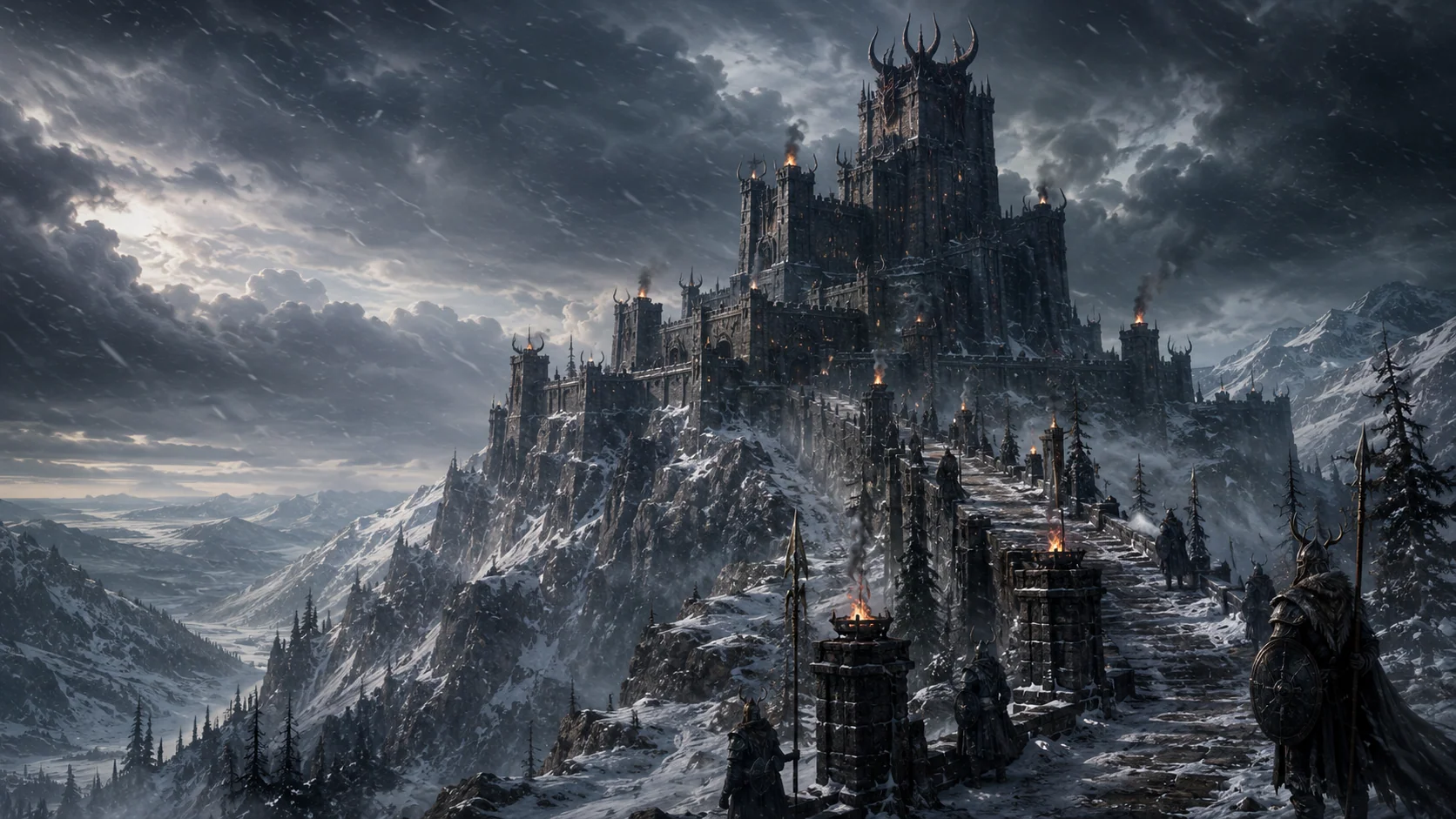
At the heart of these lands stand the Antler Hills, a rugged, wind-scarred highland of steep inclines, fractured stone and narrow passes. The hills are natural fortress ground, cold and largely bare, and they give the clan both its home and its antler emblem. Set into their eastern cliffs is Stoltengard Keep, carved so deep into the rock that wall and mountain are one, reached by a single ascending road that crosses ravines on exposed bridges and climbs through switchbacks watched at every step. At night the braziers along its walls and towers form a ring of fire visible across the hills. No force has ever taken it.
To the north the clan's frontier runs into the western White Border, the sacred and dangerous wilderness the Skarnn revere as the domain of Fenrir. Stoltengard has patrolled that border for generations, and it was in the long watch over it that the clan first made its name. Its hunters and war-bands range the frontier still, tracking incursions before they reach the settled lands, and the duty of the White Border remains as much a part of the clan's identity as the keep itself.
Along its edges the territory binds Stoltengard to its neighbors. In the west lies Ravenwood, where the clan's frontier meets the coast of Clan Karvandar, and the timber cut there feeds the shipwrights of Hafnarsvik, a tie that underpins the long alliance between the two clans. To the east the Nifleheim Road, one of the great overland routes of the north, runs through ground the clan holds in shared dominion with Clan Grimwulf. That shared hold, and the contested stretches of the White Border, are the seams where Stoltengard's old rivalry with Grimwulf is felt most.
Leadership
Leadership of Clan Stoltengard rests with the head of the clan, who rules from Stoltengard Keep. Authority is held directly, without councils or intermediaries, and it is enforced through command and the clan's long discipline. Bloodline opens the way to rule, but it does not secure it alone. A Stoltengard who cannot prove themselves in the field and in the command of the clan does not hold the seat, and the clan has always followed the one who keeps its hunters alive and its borders intact.
In the present age that leader is Sigrid Stoltengard, an unmatched huntress, battlefield commander and warden of the frontier, counted among the most formidable leaders in the Skarnn homelands. She built her name on the White Border, the most dangerous ground the clan keeps, where she tracked incursions early, chose her fights with care and returned with her people alive and her quarry dead. Her record there repeated too often to be called luck, and other clans came to rely on her word on the border long before she led her own. When the previous head of the clan died, Sigrid took the seat without serious challenge, because by then the clan already knew who had kept it safe.
Sigrid rules as she hunts, with patience, preparation and little use for anything that yields no result. She is known for competence, slow to speak and exact when she does, and she holds the clan to the same self-reliance she lives by. Above all she guards Stoltengard's independence. She has refused every marriage offered her, from allied and rival clans alike, so that the clan answers to no other house, and she has turned aside the debts and bindings that would make it dependent. She carries the hunting spear Stalakk, marked with the clan's antler and built for the field, and wears a wolf-fur mantle taken during a Winter Vigil she stood alone, both of them marks of authority won in the field.
In the wider politics of Nifleheim Sigrid keeps a steady course. She holds faith with Jarl Barl Grimwulf and the stability he gives the city, and she does not undermine him without cause, while her alliance with Clan Karvandar remains firm and her watch on Clan Vossk constant. Yet she has never let Stoltengard's old claim to the Jarlship fade from memory. She supports the order of the north as it stands, and she keeps her clan ready to act should the balance of power ever shift.
Beliefs
Clan Stoltengard holds that worth is proven by what a Skarnn can endure. Where other clans prize conquest or cunning, Stoltengard prizes vigilance, self-control and resilience, the qualities that let a people hold their ground when everything turns against them. Duty and personal responsibility are taught before all else, and a Stoltengard is expected to carry their own weight, ask nothing they have not earned and stand their post no matter the cost. The clan that survived when every other hold fell takes survival itself as the highest proof of worth, and it has little patience for weakness or for any dependence that would put the clan at another's mercy.
Stoltengard tests its beliefs as hard as it holds them. A Stoltengard comes of age in the Winter Vigil, standing alone in the Antler Hills through an entire winter night without fire or shelter, enduring the cold, the isolation and the unseen terrors of the wild without abandoning the post. To falter is a dishonor, though not a ruinous one, and those who fail are expected to return and stand the Vigil again until they pass. Those who come through it bind themselves to the clan with the Antler Oath, carving the clan's sigil into their weapon as a pledge to defend Stoltengard lands and uphold its law. To break that oath is to be cast out for good.
In matters of faith Stoltengard reveres the White Border as the domain of Fenrir, the Nature Spirit the Skarnn hold sacred, for it is that frontier the clan has kept since its earliest days, though it is Clan Grimwulf who are counted his strongest followers. The clan honors the dead as all Skarnn do, and the Elegy keep their funerary chambers within the keep itself, tending the rites owed those who fall in the long watch. To a Stoltengard, to die having held the line is no defeat, and to be remembered for endurance is the truest honor the clan can give.
Legacy
Clan Stoltengard stands as the living proof of Skarnn endurance. In a land that kills the weak and a history written in burned holds and broken clans, Stoltengard is the one whose seat never fell, and to the Skarnn that fact carries a weight beyond any single victory. When the people of the north speak of what it means to endure, to hold when holding seems impossible and to come through unbroken, they speak of Stoltengard. The clan made survival itself into a kind of honor, and in doing so gave the Skarnn one of their deepest symbols of resilience.
That legacy is more than memory. The deep stores of Stoltengard Keep, laid up against the longest winters, have made the clan the logistical backbone of the northern clans, indispensable in every famine and hard season that has come since. Its unbroken record gives it an ancestral weight few clans can match, and from that weight grows the claim Stoltengard has never set down, that the bloodline which alone held its seat has a right to the Jarlship equal to any in the north. The claim has shaped Skarnn politics for generations and shapes it still, a quiet counterweight to the rule of Grimwulf.
Where other clans are remembered for what they conquered, Stoltengard is remembered for what it refused to lose. Its keep has never been taken, its bloodline has never been broken and its watch over the western frontier has never ended. To the Skarnn, that endurance is the clan's whole meaning, and it is the promise Stoltengard makes to the north in every generation: that whatever comes, some part of Grimhold will still be standing when it passes.
Clan Karvandar
The sea made Skarnn
FactionGrimhold8 min read
Clan Karvandar is the sea-clan of the Skarnn and the naval strength of the north, master of the frozen western waters where no other clan could survive. Built on seamanship, adaptation and a sea-craft found nowhere else in Arkanthys, Karvandar commands the western coast and every route in or out of Skarnn waters. To the Karvandar the sea is no border. It is bloodline, battlefield and proving ground.
01History
Clan Karvandar made its name upon the frozen western seas, mastering over generations the waters that kill the unprepared and growing from a coastal people into the naval power of the whole Skarnn north. Its history is bound to the long contest for the sea against Clan Vossk, a rivalry as old as either clan. When the Aurellian Empire raised Vossk up and bound the Twin Wharfs to imperial coin, Karvandar took it as a betrayal of Skarnn sovereignty over its own waters, and the rivalry hardened into a contempt that endures.
02Territory
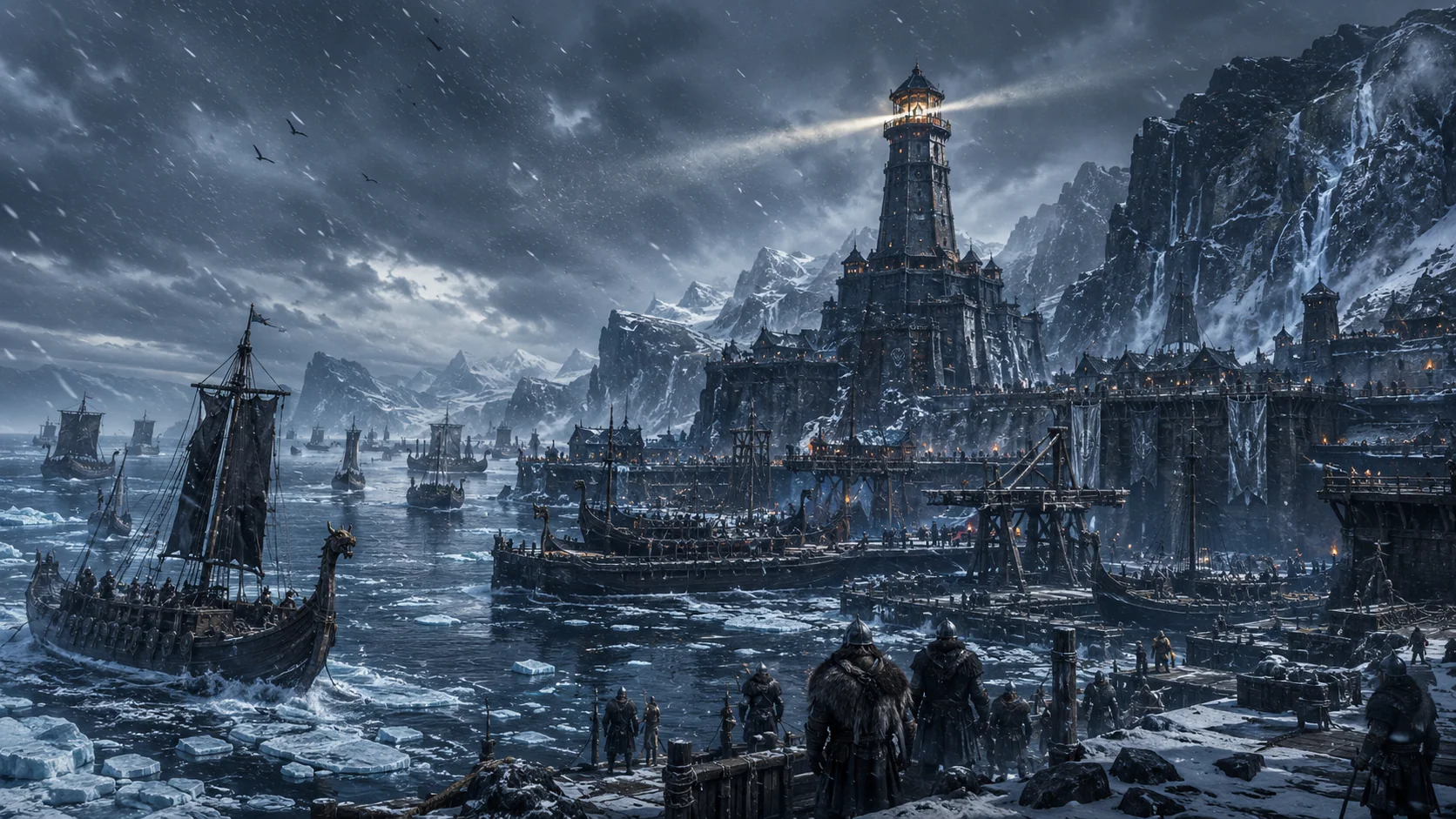
Karvandar holds the western coastline of the Skarnn lands, from the storm-lashed southern shores to the borders of Ravenwood, where it meets allied Clan Stoltengard. It is a domain of frozen bays, jagged cliffs and icebound harbors few outsiders could navigate and live. Its seat is Hafnarsvik, the only active settlement on the far western coast, a fortress-port and shipyard crowned by the Hafnarsvik Lighthouse, whose constant flame guides the fleets through storm and ice and stands as a sacred symbol of the clan's dominion over the sea.
03Beliefs
Karvandar believes the sea is a governing power, and that worth is something the sea itself decides. A young Karvandar comes of age in the Path of Ice, set alone upon the frozen sea to navigate the ice fields without aid, for the clan holds that the sea judges who is fit to bear its name. Before any voyage or battle, warriors swear the Salt Oath, dipping their weapons in seawater and pledging to return with honor or not at all.
“
The sea is the only Jarl I have ever knelt to.
— High Chief Drengr Karvandar
04Leadership
Leadership rests with the lord of Clan Karvandar, who rules from Hafnarsvik. The clan is led by Sigvald Karvandar, a ruler known for his mind before his might. Frail by Skarnn measure and doubted at his rise, he answered with results, holding the clan steady and growing its influence through careful strategy, diplomacy and the reform of the fleet after the loss of his father, the sea-lord Drengr Karvandar, to the White Sea.
Clan Karvandar made its name where no other clan would go, upon the frozen western seas. Over countless generations its people learned to live on water that kills the unprepared, building ships found nowhere else in Arkanthys and a body of sea-craft handed down from one crew to the next, until the clan that began at the water's edge became the naval power of the whole Skarnn north. From its seat at Hafnarsvik, raised as fortress, shipyard and naval command in one, Karvandar came to hold the western sea routes and every landing along that coast.
Its history has been shaped above all by the long contest for the sea. Karvandar and Clan Vossk are both seafaring clans, and for ages the two fought over the same waters in a rivalry as old as either of them. The turning of that rivalry came when the Aurellian Empire raised up Vossk, binding the merchant harbors of the Twin Wharfs to imperial coin and reshaping the balance of maritime power in the north. To Karvandar this was a betrayal of Skarnn sovereignty over its own sea, and the old rivalry hardened into the open contempt that holds to this day. Karvandar has kept the western waters as free Skarnn ever since, and it has never forgiven the Empire its hand in the matter.
In recent memory the clan was led by Drengr Karvandar, a sea-lord whose name became legend before the White Sea took him in a storm. His loss passed the clan to his son Sigvald, and the Karvandar sail on as they always have, the sea their inheritance and their proving ground.
Territory
Karvandar holds the western coastline of the Skarnn lands, from the storm-lashed southern shores to the eastern borders of Ravenwood, where its frontier meets the lands of allied Clan Stoltengard. It is a domain of frozen bays, jagged cliffs, sea caves and icebound harbors that few outsiders could navigate and live, among the harshest country in all of Grimhold. The clan thrives there through generations of adaptation and a sea-craft no other people can match, and its hold on the coast gives it command of the western sea routes and of any movement in or out of Skarnn waters.
At the heart of the territory stands Hafnarsvik, the clan's seat and the only fully active settlement on the far western coast. Built against the edge of the White Sea around a sheltered harbor, it is fortress-port, shipyard and naval command together, its docks reinforced against shifting ice and its drydocks built for the icebreaking ships found nowhere else. Over it rises the Hafnarsvik Lighthouse, a constant flame that guides the clan's fleets through blizzard, storm and drifting ice, at once a navigational anchor and a sacred symbol of Karvandar's dominion over the sea. The timber that warms its halls comes from Ravenwood, the one tie of land that binds the sea-clan to its allies inland.
Leadership
Leadership of Clan Karvandar rests with its lord, who rules from Hafnarsvik over the clan and its fleet. In the present age that lord is Sigvald Karvandar, a ruler known for his mind before his might. Born early and frail by Skarnn measure, he lacks the imposing presence the north expects of a clan-leader, and his rise was met with open doubt, above all from the older warriors who had revered his father, the sea-lord Drengr Karvandar. Sigvald answered the doubt with results. He has proven an exceptional strategist and a careful hand in politics, and through measured diplomacy and the reform of the fleet he has held the clan steady and grown its influence through a dangerous age. Under his calculated planning the clan's losses at sea have fallen, and while some still question him in private, few deny what he has done.
Sigvald governs through oversight, logistics and the careful management of risk, keeping the integrity of the fleet and the stability of the clan at the center of every decision. In the wider north he holds Karvandar's old course: a firm alliance with Clan Stoltengard, whose land-watch and sea-watch complete each other, a functional distance with Grimwulf, whose rule over Nifleheim he respects, and a cold, ancient contempt for Clan Vossk and the Empire that raised them up.
Beliefs
Karvandar belief begins and ends with the sea. The clan holds the ocean to be a governing power, unpredictable and beyond mastering, and it teaches that survival depends on understanding the sea's patterns and moving with them. Worth, to a Karvandar, is something the sea itself decides. This runs through their two great rites. In the Path of Ice, a young Karvandar is set alone upon the frozen sea in a small vessel and must navigate the shifting ice fields without aid, for the clan holds that the sea judges who is worthy to bear its name, and many who set out never return. Before any great voyage or battle, warriors swear the Salt Oath, dipping their weapons into seawater and pledging to return with honor or not at all, and to break that oath is among the gravest disgraces the clan knows.
The clan keeps the rites of departure, return and loss above all others, for the sea gives and the sea takes, and every crew that sails may not come home. The Hafnarsvik Lighthouse stands as the sacred heart of this faith, its flame a prayer against the dark water as much as a guide through it.
Legacy
Clan Karvandar stands as one of the foundational powers of Nifleheim and the uncontested master of Grimhold's western waters. Where the other clans survive the cold by enduring it, Karvandar survives by mastering what should not be survivable, living and ruling on seas that would destroy any other people. Its war-fleet is the strength of the Skarnn at sea, its shipwrights keep craft known nowhere else in the world, and without its ships no force moves in or out of the western waters of the north.
To the Skarnn, Karvandar is proof that the sea itself can be made to serve those hard enough to learn it. They are the sea made Skarnn, and as long as the western waters are held by free hands, they will be Karvandar hands.
Clan Vossk
Power held by the subtler hand
FactionGrimhold8 min read
Clan Vossk is the smallest of the four great Skarnn clans and the most politically agile, holding little land yet wielding influence far beyond its size. Where the other clans rose through conquest, endurance or martial strength, Vossk rose through commerce, negotiation and control of Nifleheim's southeastern sea routes, and through the closest ties to the Aurellian Empire any Skarnn clan keeps. Vossk calls itself realist, the one clan willing to face the realities of the wider world, whatever the others name it.
01History
Clan Vossk rose through commerce and cunning where other clans rose through war. It took the southeastern sea routes that connect Grimhold to foreign shores and made itself the way foreign goods enter the north. Under Stongaarr Halra-Vossk, who took the clan in hand during a time of weakness, Vossk turned from territory toward trade, ship-repair and agreement, and bound itself to the Aurellian Empire and the Ordo Dominus for naval support, protected routes and intelligence. Within a generation the clan recovered its strength and its wealth, and within that same generation it earned the distrust that has clung to it ever since.
02Territory
Vossk holds the southeastern cliffs and fjords of Nifleheim, the smallest territory of the great clans but the one overlooking the narrow passages that connect Grimhold to the wider world. Its coast is a natural maze of jagged cliffs, concealed inlets, treacherous currents and frozen channels known only to local navigators. Its seat is Twin Wharfs, a hidden drydock city carved into a vast coastal cavern split by a central cliff, invisible from the open sea and counted among the most secure settlements in Grimhold. Through it passes most of the foreign trade that reaches the Skarnn.
03Beliefs
Vossk prizes restraint, guarded intent and strategic wisdom, holding that wisdom lies in knowing what to conceal. Its defining rite is the Tide of Two Faces, performed at the spring thaw, in which participants carve two mirrored masks from driftwood, one the face shown to the world and one the truth kept beneath it. The rite captures how the clan moves through the world, by what it shows and by what it keeps hidden. Vossk keeps the common rites of the Skarnn, but it leans further from the old reverence than any other clan, trusting more to its own wits than to spirits or ancestors.
04Leadership
Leadership rests with the head of Clan Vossk, who rules from Twin Wharfs. The clan is led by Stongaarr Halra-Vossk, an ambitious and politically gifted ruler counted among the most capable figures in Nifleheim. Broad and imposing yet dressed for the council more than the battle-line, he favors patience, concealed weapons and letting others speak before he does. He is the architect of Vossk's wealth and its imperial ties, respected within the clan as the man who restored it and distrusted outside it as too willing to barter Skarnn interests. Vossk has never produced a Jarl, and many believe Stongaarr means to change that.
Clan Vossk did not rise the way the other clans rose. It won no great wars and held no broad territory, and for much of its history it was the least of the major clans, rich in cunning but poor in the strength the north respects. Its rise came through trade and through the southeastern sea routes that link Grimhold to the world beyond, the narrow passages every foreign ship must use to reach the Skarnn. Vossk made itself the keeper of that gate, and the way that foreign goods, foreign coin and foreign word enter the north.
The clan as it stands today was made by Stongaarr Halra-Vossk, who took it in hand during a time of decline, when Vossk lacked the power to stand against Grimwulf's authority or Stoltengard's hold on the land. He turned the clan away from territory and toward what it could truly command: maritime control, ship-repair, the management of trade and the gathering of information. Above all he bound Vossk to the Aurellian Empire and the Ordo Dominus, trading cooperation for naval support, protected routes and intelligence no other clan could reach.
Within a single generation that bargain remade the clan. Vossk grew wealthy, its hidden city at Twin Wharfs grew into a fortified drydock, and its influence spread through Nifleheim by way of contracts, harbor officials and informants. The same bargain earned it a lasting distrust, for to the traditional clans Vossk had sold Skarnn sovereignty for foreign favor. Vossk has carried both the wealth and the suspicion ever since, and judged the trade worth making.
Territory
Vossk holds the southeastern cliffs and fjords of Nifleheim, the smallest territory of the great clans and in some ways the most valuable. Its coast overlooks the narrow passages that connect Grimhold to foreign shores, the safest and most viable eastern sea routes in or out of Skarnn waters, and whoever holds that ground holds the door between the north and the world. The land itself is a natural fortress of jagged cliffs, concealed inlets, treacherous currents and frozen channels that only local navigators can read, easily defended and easily hidden.
At the heart of the territory lies Twin Wharfs, the clan's seat and one of the strangest cities in Grimhold. It is built entirely within a vast coastal cavern split by a central stone ridge, two harbors carved into the rock under complete cover, invisible from the open sea and reached only through narrow channels and watched descents. Raised with imported Khazal masonry and foreign timber, lit by lamp and reflective crystal and run by mechanical lifts and gates, it is drydock, harbor, naval fortress, trade port and intelligence hub at once. Through Twin Wharfs passes most of the foreign trade that ever reaches the Skarnn, and little moves through it that Vossk does not see.
Leadership
Leadership of Clan Vossk rests with its head, who rules from Twin Wharfs, and in the present age that is Stongaarr Halra-Vossk, one of the most capable political figures in all of Nifleheim. He is broad and imposing enough to pass for any Skarnn warlord, yet he dresses like a man of the council, in tailored dark leathers and restrained silver, and favors concealed blades over open shows of force. He is composed, articulate and patient, slow to refuse outright when delay will serve him better, and he prefers to let others speak first and use what they reveal. He measures every choice by what it will give the clan in six months, six years or a generation.
His power rests on what Nifleheim needs from him. Through Twin Wharfs he controls the eastern sea access, the foreign goods, the ship-repair, the naval contracts and much of the information arriving from beyond Grimhold, so no great matter of trade or outside contact moves without Vossk somewhere in it. He does not openly challenge Jarl Barl Grimwulf, but he can slow a shipment, redirect a contract or decide which word reaches which hall first, and that quiet leverage is why the other clans watch him so closely. Vossk has never produced a Jarl in all its history, and few who know Stongaarr doubt that he means to be the first.
Beliefs
Vossk belief is built on restraint and the careful keeping of what should not be shown. The clan holds that wisdom lies in knowing what to conceal, and it values guarded intent, patience and strategic sense above the open displays of strength the other clans prize. Its defining rite is the Tide of Two Faces, performed at the spring thaw, in which a Vossk carves two mirrored masks from driftwood, one the face shown to the world and one the truth kept beneath it. The rite is the clan's creed made plain, that a person, like a clan, lives by what they reveal and by what they keep hidden.
In matters of faith Vossk stands apart from its kin. It keeps the common rites of the Skarnn, the oaths and the honoring of the dead, but it leans further from the old reverence than any other clan, trusting its own wits, its contracts and its information where other clans trust spirits and ancestors. Grimwulf looks to Fenrir and the rest to the land and sea that shaped them, while Vossk looks to advantage. That coldness toward the old ways is one more reason the traditional clans hold it at arm's length.
Legacy
Clan Vossk endures because it learned, in a land that measures worth in warriors, that strength alone does not rule. Where the other clans built their power on conquest, endurance and the mastery of land and sea, Vossk built its own on the things they dismissed, influence, information and opportunity, and made the smallest clan into one that none of them can afford to ignore. Its blades are few, but what it knows and what it controls is feared across Nifleheim.
That same path is the source of all the distrust that follows the clan. To the traditional Skarnn, Vossk is proof of how far a clan will go and how much it will give away, having tied the prosperity of the north to foreign coin and imperial tolerance. To Vossk, it is proof of the opposite, that the clan willing to deal with the world as it truly is will still be standing when the proud have broken. The argument between those two judgments is, in the end, the argument over what the Skarnn must become to survive.